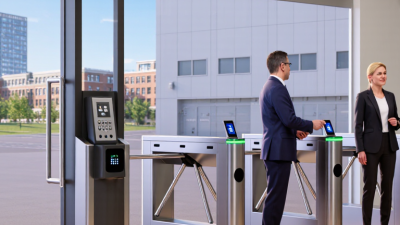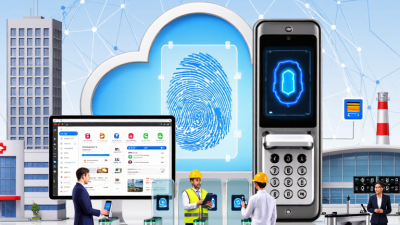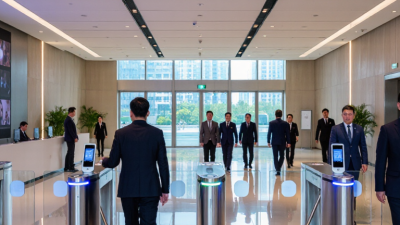
Choosing the best Access Control Solutions in China depends on more than a reader’s speed or a sleek mobile app. Sites may need card credentials, PIN pads, mobile entry, or biometric readers, all connected to doors, lifts, visitor systems, and security monitoring. A badge tap at a factory gate is only one small part of the decision. Reliability, local support, integration, and clear credential management matter just as much.
MarketsandMarkets estimated the global access control market at USD 10.3 billion in 2023, forecasting USD 15.2 billion by 2028. This is useful industry context, not a China-specific market measurement; report definitions and forecasts can differ. Security technologist Bruce Schneier’s well-known observation, “Security is a process, not a product,” applies directly to access control. A system needs regular maintenance, careful permissions, and tested fallback procedures. Even strong hardware can disappoint when doors are misconfigured or support is slow. That point is easy to overlook.
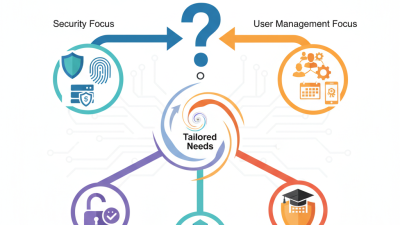
This guide compares solution types and practical selection criteria for Chinese businesses, property teams, and facility operators. It considers deployment scale, user experience, integration, vendor service, and data-handling requirements. No single platform fits every site. A small office may value simple administration, while a multi-building campus may need centralized policies and dependable offline operation. The honest answer is sometimes less tidy: product claims alone cannot prove performance in your own environment. Pilot testing can reveal the awkward details—like a reader struggling at a busy entrance—that a brochure will not.
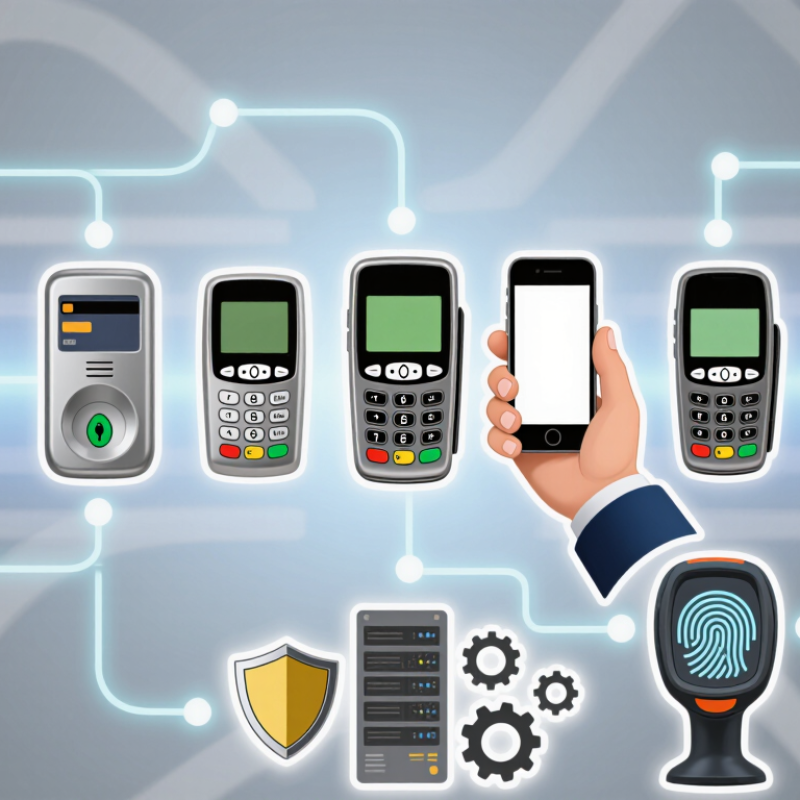
Access control is the coordinated process of verifying identity, granting or denying entry, and recording events. China’s GB/T 37078-2018, Technical Requirements for Access Control Systems, offers a technical reference for system design and operation. For each doorway, project teams should map credentials, authorization rules, door hardware, alarms, and event records to site risks. Test practical failures too: a revoked card, network interruption, or power loss. Small details matter. The standard is not a substitute for checking the applicable clauses and project-specific requirements.
MarketsandMarkets estimated the global access control market at US$10.4 billion in 2023, forecasting US$15.2 billion by 2028. That growth signals investment, not a need for more intrusive checks at every entrance. Verizon’s 2024 Data Breach Investigations Report found a human element in 68% of breaches it analyzed; this concerns data breaches, not physical-access incidents. Still, it supports careful credential administration, limited privileges, and routine log reviews. One weakness remains: even a well-designed system can fail when staff permissions stay active after roles change.
In China, choosing access credentials starts with the doorway, not the reader specification. The key difference is how closely a person must present a credential. Neither frequency alone makes a system secure; reader design, credential protection, and installation all matter. Close range matters.
A 13.56 MHz NFC card or phone usually works within a few centimeters. That deliberate tap suits office doors, turnstiles, and shared entrances where each entry should be clearly intentional. It can feel slower when people carry bags or move through a busy lobby. Test cards and phones at the actual reader, especially near metal frames, which can affect performance.
UHF RFID in the 920–925 MHz band can read credentials from farther away and may identify several tags quickly. That can help at vehicle gates or controlled loading areas, but it also increases the chance of reading a nearby credential unintentionally. Antenna placement, walls, and surrounding equipment change real-world range. I would not assume UHF is automatically more convenient; sometimes it creates messy reads. Before choosing, trial both options at the site, define the intended read zone, and confirm current local radio requirements with qualified providers.
In an office lobby, a fingerprint reader may reject a wet thumb, while a face reader may struggle with glare from glass doors. These failures illustrate two important measures: the false acceptance rate (FAR) and false rejection rate (FRR). FAR tracks unauthorized attempts accepted; FRR tracks legitimate users denied. Lowering one can raise the other. There is no perfect threshold. Compare results only when test conditions, user groups, and decision thresholds are similar.
For Chinese workplaces, test biometrics at the actual entrance, during busy shifts, and with varied lighting and user conditions. A short pilot can reveal whether staff repeatedly adjust their position or retry a scan. Small detail. Ask suppliers for independent test reports, not just headline accuracy claims. ISO/IEC 30107-3 covers testing and reporting of presentation attack detection (PAD), which assesses resistance to spoofing attempts. It does not certify an entire access-control system or guarantee performance at every site. That distinction is easy to miss. Review how enrollment, fallback access, and biometric data handling work, too. Even a strong lab score can disappoint when installation or daily procedures are poor. I would not choose on one number alone.
| Access method | How it verifies identity | FAR and FRR considerations | ISO/IEC 30107-3 PAD relevance | Practical strengths | Limitations and deployment considerations |
|---|---|---|---|---|---|
| Fingerprint recognition | Compares a captured fingerprint with an enrolled reference template. | FAR (false acceptance rate) and FRR (false rejection rate) depend on the sensor, matching threshold, enrolment quality, and test population. A stricter threshold can reduce false accepts while increasing false rejects; there is no single universal rate. | Applicable when presentation attack detection (PAD) is evaluated. Request test results and the tested attack instruments and conditions; PAD results do not replace FAR/FRR results. | Compact readers and quick authentication can make it practical for staffed entrances and controlled indoor locations. | Dirty, wet, worn, or damaged fingers can affect capture. Provide an accessible alternative and a fallback credential. |
| Face recognition | Compares a live facial image with an enrolled reference, typically using a camera and matching software. | FAR and FRR vary with image quality, lighting, camera position, threshold, and evaluation population. Results from different systems are not directly comparable unless test conditions and thresholds are aligned. | Relevant to testing whether the system detects presentation attacks, such as printed images or displayed imagery, within the tested conditions. A PAD result does not establish overall face-matching accuracy. | Can support hands-free entry and high-throughput access where camera placement and lighting are suitable. | Occlusion, pose, lighting, and changes in appearance can affect usability. Assess privacy, necessity, notice, access controls, and retention before deployment. |
| Iris recognition | Images distinctive iris patterns and compares them with an enrolled reference. | FAR and FRR are system- and threshold-dependent. Capture distance, alignment, image quality, and user cooperation can affect rejection rates. | PAD evaluation can be relevant to the biometric capture and matching process. Check the scope and conditions of any reported PAD test rather than treating it as a general security guarantee. | Can be considered for locations requiring controlled, deliberate biometric capture. | Requires suitable capture hardware and positioning; deployment cost and user experience should be assessed at the site. |
| Palm-vein recognition | Uses an image of vascular patterns beneath the palm skin for comparison with an enrolled reference. | FAR and FRR must be measured for the specific device, matching threshold, enrolment process, and intended population; no modality-wide rate applies. | Where PAD is claimed, examine the test method, attack types, and reported results. ISO/IEC 30107-3 addresses PAD testing and reporting, not a universal FAR or FRR benchmark. | Contactless capture may be useful where shared touch surfaces are undesirable. | Requires dedicated readers and appropriate hand positioning. Verify performance and accessibility under actual operating conditions. |
| Card or mobile credential | Reads a physical access card or a credential presented by a mobile device. | Biometric FAR/FRR are not applicable unless a biometric is also used. Evaluate credential cloning, loss, revocation, reader security, and authentication design instead. | Not applicable to a non-biometric credential by itself. If a biometric is added to the authentication flow, assess PAD for that biometric separately. | Supports straightforward issuance and revocation and can be combined with other factors. | Credentials can be lost, shared, or misused. Strong credential protection and a clear revocation process are important. |
| PIN or password | Checks a memorized secret entered at a keypad or terminal. | Biometric FAR/FRR are not applicable. Security depends on secret length, guessing controls, keypad privacy, and resistance to observation or disclosure. | Not applicable unless used alongside a biometric system that undergoes PAD testing. | Can provide a low-hardware-cost factor or a fallback method. | Secrets may be shared, observed, or reused. Apply rate limits and provide a secure reset process. |
| Multi-factor access (for example, card plus biometric or PIN plus biometric) | Requires two or more different factors, such as a credential and a biometric. | Measure FAR and FRR for the complete configured system as well as relevant biometric components. Combined performance cannot be inferred reliably by multiplying component rates without justified independence assumptions. | PAD applies to the biometric component. Confirm that PAD testing covers the relevant capture device, software, and attack conditions. | Can reduce reliance on a single factor and suit higher-risk access points. | May add cost and steps for users. Plan for outages, lost credentials, accessibility, and secure fallback procedures. |
How to interpret the metrics: FAR is the proportion of impostor attempts incorrectly accepted; FRR is the proportion of genuine attempts incorrectly rejected. Both depend on the system, operating threshold, test protocol, and population, so compare figures only when those conditions are disclosed and reasonably aligned. ISO/IEC 30107-3 specifies principles for testing and reporting biometric presentation attack detection (PAD); it does not set a universal FAR/FRR target or, by itself, guarantee that a system is secure.
China’s Multi-Level Protection Scheme (MLPS 2.0) classifies information systems into five protection levels. Classification reflects the potential harm to individuals, public interests, social order, and national security. A level is not a product grade; it informs the safeguards and assessment requirements that apply to a system. China’s GB/T 22239-2019 standard covers identity authentication, access control, security auditing, and communications protection. In practice, a hospital might limit medication records by role, require stronger checks for remote administration, and log each privilege change. Details matter.
The 2024 Data Breach Investigations Report found human involvement in 68% of breaches. That supports combining technical controls with clear procedures and staff training. The 2024 Cost of a Data Breach Report estimated the global average breach cost at US$4.88 million, although costs vary by sector and these figures are not China-specific. MLPS classification alone cannot secure access. Shared accounts, stale permissions, and unchecked exceptions can weaken a carefully written policy. Small gaps persist. Teams should assign each account an owner, review privileged access regularly, and test whether logs reveal unusual activity. A useful review question: can staff explain why each person still needs access?
Choosing an access control deployment depends on site layout, network reliability, staffing, and data requirements. Cloud systems let authorized teams manage multiple locations through a central dashboard. They can simplify updates and remote administration. Useful for distributed offices. Yet doors still need reliable local operation during network interruptions, so verify offline behavior before purchase.
On-premise systems keep administration and records on servers managed at the site. They suit facilities with dedicated IT staff, stable server rooms, and tighter control over system changes. The trade-off is ongoing maintenance: someone must handle backups, patches, and hardware failures. A server closet is not a strategy. Hybrid systems combine local door control with selected cloud management. For example, a site can keep entry decisions local while managers review events remotely. This can balance continuity and visibility, but integrations may add cost and complexity.
Before choosing, map each entrance, reader, and expected user group. Check network coverage in stairwells and loading areas, not just office corridors. Ask how credentials are revoked, how logs are retained, and what happens during a power or internet outage. Review applicable data-handling requirements with qualified advisers. A small pilot can expose weak assumptions. The best fit may be less elegant than expected.