2026 Best Automatic Diaper Machines for Global Buyers
Choosing an Automatic Diaper machine in 2026 is a production decision, not just a speed comparison. Global buyers must weigh output, product range, changeover time, energy use, and after-sales support. A line may look impressive in a showroom, yet struggle with frequent size changes or inconsistent raw materials. Small details matter.
The International Federation of Robotics’ World Robotics 2024 report counted 4,281,585 industrial robots operating in factories worldwide in 2023, a 10% increase from 2022. This is not diaper-line data, but it shows how rapidly factory automation is expanding. For diaper manufacturers, automation can support consistent folding, accurate cutting, and stable packaging rates. Still, a high-speed specification alone cannot prove reliable daily performance.
IFR President Marina Bill, a manufacturing-automation expert, said, “The new World Robotics report shows that the automation of manufacturing is accelerating worldwide.” Buyers should apply that broader trend carefully: diaper lines also depend on operator training, maintenance access, and the availability of spare parts. Not just speed. This guide compares leading machine options by production needs, technical flexibility, and service readiness. It also recognizes a limitation: published specifications rarely reveal the full cost of downtime. A factory visit or witnessed acceptance test can answer questions that brochures cannot.
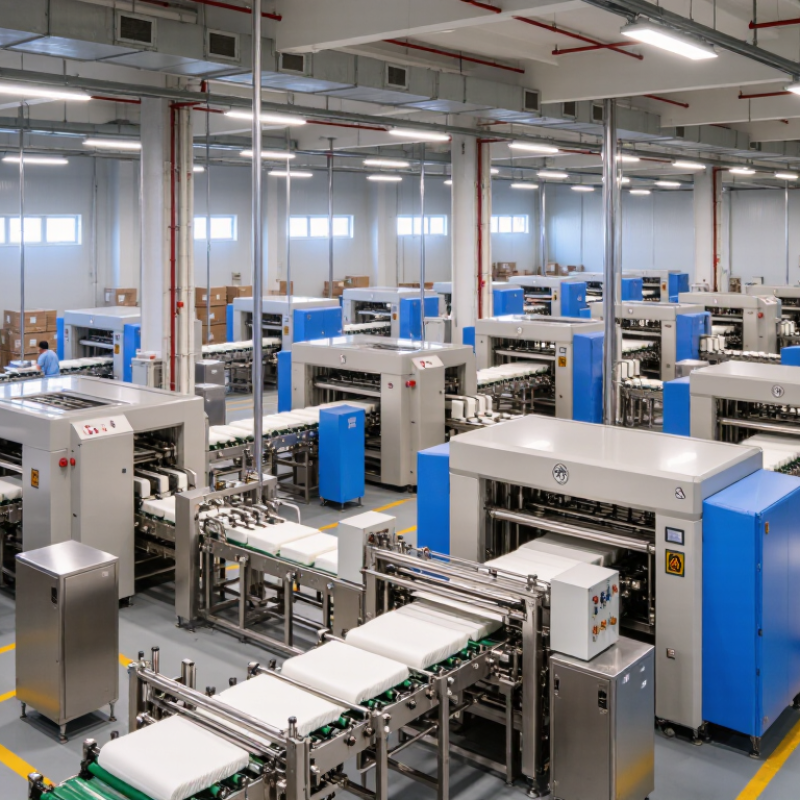
Define Global Buyer Needs: Baby, Adult, and Incontinence Diaper Formats
Global buyers should define the product mix before comparing automatic diaper machines. Baby diapers need fast size changes, stable elastic placement, and clean cut edges. Adult briefs require larger absorbent cores, stronger fastening zones, and roomier chassis. Incontinence pads are different again: many are shaped for discreet wear, not full-brief coverage. One machine may not handle every format economically. No line is perfectly flexible.
The World Health Organization’s 2024 ageing fact sheet reports that people aged 60 and older will rise from 1 billion in 2020 to 1.4 billion by 2030. It projects 2.1 billion by 2050. That points to growing relevance for adult-care products, but local demand still varies by care setting and consumer preference. For baby products, buyers should assess size ranges, pull-on versus taped designs, and expected changeover frequency. UNICEF’s 2023 report on infant and young child feeding emphasizes that caregiving practices differ across contexts; product assumptions should be checked against local use, not copied from another market.
Ask suppliers for tested output by format, not just the machine’s maximum speed. Check core placement, seal consistency, material waste, and changeover time using the actual product structure. A fast line can still be a poor fit. I would also question any proposal that treats “adult diaper” as one specification: briefs, tab-style products, and lighter incontinence pads demand different web paths and packing setups.
Benchmark Output: 300–600 Diapers per Minute on High-Speed Lines
For global buyers, 300–600 diapers per minute is a useful benchmark for high-speed automatic diaper lines, not a guaranteed daily output. The figure usually describes machine speed under defined operating conditions. Ask suppliers how they measured it: on a specific diaper size, during a short trial, or across a full production shift. Those are different results.
Small details matter. A line running at 450 diapers per minute may lose time during roll changes, size adjustments, or quality checks. Track saleable units, not just pieces passing the machine. Request trial data showing uptime, rejected products, and output by diaper size. A clear record is more useful than a headline speed. The number can mislead.
High speed also depends on stable material feeding and precise cutting, folding, and bonding. Even a brief web break can leave operators clearing material and restarting the line. Confirm whether quoted output includes routine stops, and ask how many minutes a product change takes. These questions can reveal practical capacity better than a peak-speed claim. Results will vary, and sometimes the supplier’s trial conditions are not fully comparable to a buyer’s factory. Keep that limitation visible when comparing proposals.
Compare Machine Modules: SAP Dosing, Web Handling, Folding, and Sealing
A diaper line is not one machine, but a chain of modules that must stay in rhythm. SAP dosing controls absorbent-core consistency. Buyers should check dosing range, calibration access, and how operators verify output during a shift. A small variation can affect core weight and product performance. Ask for test data using the intended material, not only a supplier’s standard sample. Details matter.
Web handling guides topsheet, backsheet, and acquisition layers through the line. Review tension control, splice access, and how the machine responds to roll changes. Folding modules need stable alignment across product sizes; inspect sample diapers for uneven leg cuffs or shifted layers. Sealing performance depends on temperature, pressure, and dwell time. Request clear adjustment ranges and practical changeover steps, not just maximum speed figures.
These modules interact. A faster web section may create problems if folding or sealing cannot keep pace. During acceptance testing, observe ordinary starts, stops, and material changes, not only a smooth continuous run. I would still question any specification that omits material assumptions. It is easy to underestimate operator training, too. A detailed manual helps, but it cannot replace hands-on setup practice.
Check Quality and Safety: ISO 9001:2015 and ISO 13849-1
For global buyers evaluating automatic diaper machines, quality evidence should be visible on the factory floor, not just in a sales file. ISO’s ISO Survey 2022 recorded 1,265,216 valid ISO 9001 certificates across 188 countries and economies. That scale shows how widely the quality framework is used; it does not prove that a particular machine is well built. Ask for the supplier’s current certificate scope, inspection records, and traceability for key components. Check a sample log for items such as sensor tests, electrical cabinet checks, and rejected-product trials. Paper is not protection.
ISO 9001:2015 helps assess whether a supplier controls design changes, nonconformities, and corrective actions. ISO 13849-1 addresses the design of safety-related control systems. Request the machine’s risk assessment, required and achieved performance levels, and validation results for functions such as emergency stops and access guards. During a factory acceptance test, observe whether opening a guarded panel stops hazardous motion and prevents an unexpected restart. Confirm that these results match the delivered configuration. A certificate alone cannot show that. One detail is easy to miss: options added late can change safety behavior, so ask for updated documents after modifications. And verify the applicable standard edition in the contract.
Evaluate Site Fit: 50/60 Hz Power, Changeovers, Service, and Total Cost of Ownership
For global buyers, a diaper machine’s rated output matters only when the factory can support it. Check the site supply before comparing quotes: voltage, phase, frequency, and transformer capacity. Frequency matters. A 50 Hz and a 60 Hz supply can affect motor speed, control settings, and auxiliary equipment. Ask for the exact machine configuration in writing, then have a local electrician verify compatibility. Don’t assume a frequency converter resolves every mismatch; heaters, drives, and safety circuits may need separate review.
Changeovers shape real production capacity. Request changeover times for your actual product mix, including adjustments to cores, waistbands, and packaging. Observe a changeover during acceptance testing. Record tools, operators, scrap, and restart time. A quoted changeover can look different on a busy night shift. Service readiness matters. Confirm technician response routes, spare-part lead times, remote diagnostics, and operator training in the plant’s working language.
Total cost of ownership includes energy, compressed air, rejected material, maintenance labor, and downtime—not just the purchase price. Keep critical consumables and format parts locally when delays could stop production. Even a careful spreadsheet misses something. Compare a low-output scenario with the supplier’s best case, and revisit your assumptions after trial runs.
2026 Best Automatic Diaper Machines for Global Buyers
Evaluate Site Fit: 50/60 Hz Power, Changeovers, Service, and Total Cost of Ownership
Nominal mains frequency varies by market; Japan uses 50 Hz in the east and 60 Hz in the west. Before ordering, confirm the machine’s voltage, phase, and frequency requirements with the supplier. Compare documented changeover times, local service coverage, spare-parts availability, and lifetime operating costs for each machine configuration.