
A coffee table can change how a living room feels, even before anyone sits down. The Modern High Gloss Black Coffee Table pairs a reflective finish with a strong visual presence. It can sharpen a pale room, echo dark window frames, or make a compact seating area feel more intentional. But gloss is not effortless. Fingerprints, dust, and reflected light can become noticeable on the same smooth surface that gives the table its appeal.
Market context helps explain why material and finish deserve careful attention. Grand View Research estimated the global furniture market at USD 736.7 billion in 2023 and projected 5.0% annual growth from 2024 to 2030. That figure covers furniture broadly, not coffee tables alone. Still, it signals a large, competitive category where shoppers face many designs and material claims. Look beyond the product photo. Check the tabletop’s core, edge construction, finish consistency, cleaning guidance, and stated weight capacity. Measure the sofa height and walking space, too. A table that looks elegant online may feel bulky beside a low sofa.
Small details matter. A black surface can show more than expected. Ask how it handles daily use, and verify care instructions with the seller. One limitation is easy to overlook: glossy finishes vary, and product images may not show their undertones accurately. Compare dimensions and return terms before deciding. The best choice balances appearance with the room’s real routines—not just a polished photograph.
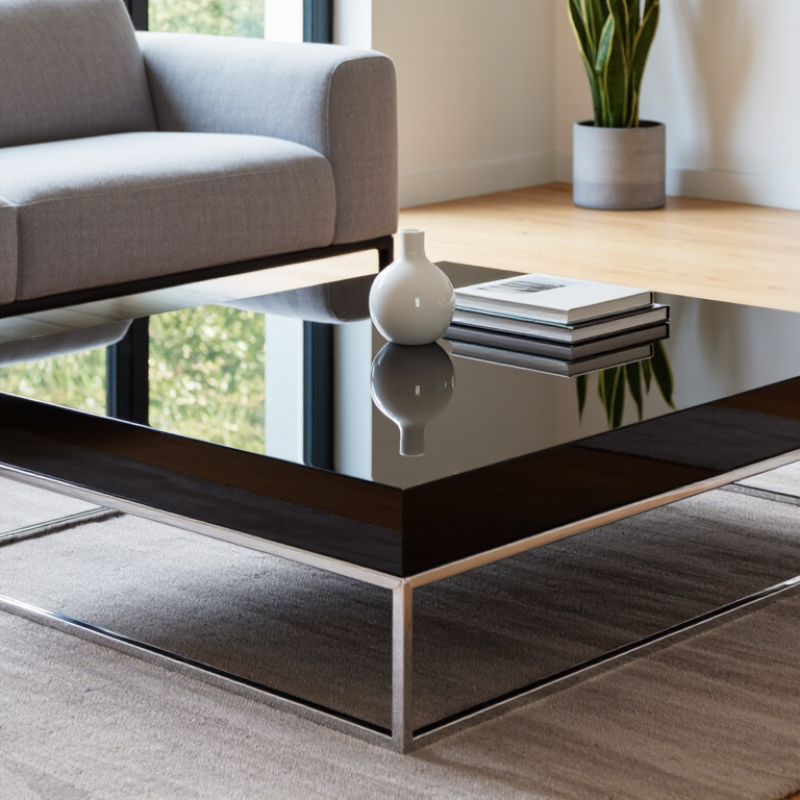
A modern high gloss black coffee table should fit the way you use your room, not just its color scheme. Measure the open floor area and the distance between your sofa and nearby chairs. Around 14 to 18 inches of walking space is often comfortable, but adjust it to your layout. A compact room may need a narrow, oval table; a larger seating area can handle a wider top. Gloss reflects windows and lamps, which can make a dim corner feel brighter. It also shows fingerprints and dust more readily. Worth considering before you buy.
Think about what lands on the table each day. For drinks, snacks, and a few books, choose a stable surface with enough usable space. If it doubles as a work spot, check its height against your sofa and consider whether the finish may show scratches. Rounded corners can be useful in busy walkways. Storage helps with remotes, but drawers need room to open. Your first layout may still feel awkward; move the table a few inches and test it for a day.
Tips: Mark the table’s footprint with painter’s tape. Sit down, walk around it, and check whether you can reach the top comfortably. Keep a soft cloth nearby for quick cleaning.

Measure your seating area before choosing a modern high gloss black coffee table. Note the sofa’s width, seat height, and the open floor space around it. A table that looks small in a product photo may feel bulky beside a compact sofa. Aim for a tabletop about two-thirds the sofa’s length, and keep roughly 14 to 18 inches between the table and seating. That gap allows people to reach drinks without squeezing past the edge. Leave a clear walking route, ideally around 30 inches where the room allows.
Tips: Use painter’s tape to mark the table’s footprint on the floor. Live with the outline for a day. Walk around it, then check whether doors and drawers still open freely. Measure the proposed height against your sofa seat; a tabletop near seat height is usually easy to reach. These are starting points, not rules. Room layouts differ.
High-gloss black surfaces reflect light and can make a table feel visually prominent. In a narrow room, a rounded or oval shape may soften corners and improve movement. Recheck your measurements after moving the sofa; it is easy to assume the old layout still works. Also consider the tabletop’s usable area: a sculptural base can look striking but leave little room for a tray or book. Don’t trust the tape alone. Sit down and picture your everyday reach.
Use these measurements as practical planning guidelines. Measure the clear floor area and sofa before choosing a table; product dimensions and room layouts vary.
| What to Measure | Useful Guideline | Example | Why It Matters |
|---|---|---|---|
| Sofa length | A coffee table is often about one-half to two-thirds the length of the sofa. | For a 210 cm sofa, consider a table about 105–140 cm long. | Helps the table feel balanced without overwhelming the seating area. |
| Gap between table and seating | Allow roughly 36–46 cm between the table edge and the sofa or chairs. | If the sofa front is at 0 cm, place the table edge about 36–46 cm away. | Provides room to sit and move while keeping drinks and other items within reach. |
| Table height | Choose a table close to the sofa-seat height, or a few centimetres lower. | With a 45 cm seat height, a table around 40–45 cm high is a practical starting point. | Makes the tabletop comfortable to reach from the seating position. |
| Walking route | Keep a clear path around the furniture; aim for about 76 cm where a main walkway passes. | Measure from the table’s outer edge to the nearest wall, doorway, or other furniture. | Supports comfortable circulation through the room. A narrower secondary passage may be needed in compact rooms. |
| Small seating area | For a sofa around 150–180 cm long, consider a table roughly 75–115 cm long. | A compact rectangular table might measure 90 × 50 cm. | Leaves more open floor space while keeping the tabletop useful. |
| Medium seating area | For a sofa around 180–220 cm long, consider a table roughly 90–145 cm long. | A medium rectangular table might measure 110 × 60 cm. | Provides a balanced surface for everyday use without dominating the sofa. |
| Large seating area | For a sofa around 220–260 cm long, consider a table roughly 110–170 cm long, subject to clearance. | A larger rectangular table might measure 130 × 70 cm. | Offers more usable surface; confirm that the longer footprint does not obstruct circulation. |
| High-gloss black finish | Check the full footprint, including corners and any projecting base or legs. | Use painter’s tape to mark the proposed length and width on the floor. | A dark reflective surface can draw visual attention, so a correctly scaled table helps maintain a balanced layout. |
A modern high-gloss black coffee table can look sleek in a showroom, but its materials affect everyday use. Compare engineered wood, solid wood, and glass rather than judging by color alone. Engineered wood can provide a smooth, consistent base for a lacquered finish, while solid wood may shift slightly with changes in humidity. Neither is automatically better. Check the edges and underside for sealed seams, especially if drinks are often set down nearby.
Construction matters as much as the surface. Look for stable legs, secure joints, and a top that does not flex when pressed gently at the center. A heavy-looking table can still wobble. Check it on a level floor, and inspect the corners for chips or uneven gaps. Storage shelves and drawers add convenience, but their hardware should move smoothly without scraping.
Gloss levels vary. A mirror-like finish reflects windows and lamps sharply, while a softer gloss shows less glare but still catches fingerprints. View a sample near a window if possible; indoor lighting can make black finishes appear flatter. Ask how the surface should be cleaned, and use a soft cloth before dust becomes visible. Dark gloss is striking, admittedly, but it can demand more frequent wiping than expected. Scratches may also stand out, so consider your room’s traffic and how the table will actually be used.
A modern high-gloss black coffee table can anchor a room, but its shape should suit the way you move through it. In a compact living area, a round or oval top softens tight paths and reduces sharp corners. A rectangular table often works better beside a long sofa, especially when it leaves enough space to walk around. Measure the seating area before choosing; visual balance can be deceptive.
Consider how the table will be used, not just how it looks. A lower shelf can hold magazines or a woven basket, while drawers keep remotes out of sight. Glossy surfaces reflect light, which may brighten a dim corner, but they also show fingerprints and dust. A microfiber cloth helps with routine cleaning. I’d avoid placing the table where sunlight hits it all afternoon; reflections can become distracting. That detail is easy to overlook.
Tips: Leave roughly 35–45 centimeters between the table and sofa for comfortable reach. Check the table’s height against your seat cushions, too. If you have children or pets, rounded edges may feel more practical. A beautiful table can still be the wrong fit.
Compare the calculated surface area of four sample tabletop shapes to help judge how much visual and usable space each may occupy.
How to use this chart: These are sample dimensions, not standard sizes. A round or oval table can soften a room with angular furniture, while a rectangular or square top may suit a more structured layout. Measure your space and leave comfortable room to move around the table.
A modern high gloss black coffee table can look striking, but check its stability before judging the finish. Press gently on each corner; the table should not rock or slide across the floor. Look closely. Smooth, rounded edges are kinder to knees, especially in a busy living room. If the table has glass panels, inspect the edges and confirm they are securely fitted. Check the maker’s stated weight limit before placing heavy books or decorative objects on top. A glossy surface reflects light beautifully, though it can also reveal fingerprints, dust, and fine scratches.
Ask how the finish should be cleaned. A soft microfiber cloth and a slightly damp wipe are usually safer than abrasive pads or harsh cleaners; always follow the care instructions. Use coasters, and lift objects rather than dragging them. Small details matter. Compare the table’s dimensions with your sofa and walking space, then include delivery, assembly, and any included storage when assessing value. A lower price may not feel like a bargain if the finish is difficult to maintain or the table wobbles after assembly. I once underestimated how quickly a dark, shiny top showed dust in direct sunlight. That is a small drawback, but worth considering in a bright room.