How to Choose the Best Access Control Solutions for Your Business?
Choosing the right Access Control Solutions is vital for any business. This decision impacts security, employee productivity, and operational efficiency. The right system protects your assets and ensures a reliable environment for your team.
Many businesses face challenges in selecting the best options. With so many solutions available, it can feel overwhelming. Will a keycard system suffice? Should you invest in biometric technology? These questions often lead to confusion. Reflecting on your unique needs can help clarify the path forward.
Consider the specifics of your business. The size of your facility, employee count, and access requirements all play a role. What works for a small startup may not suit a large corporation. Mistakes in choice can lead to security gaps and increased costs. It's essential to balance security needs with practicality. Engaging in thoughtful assessment will guide you toward an effective solution.

Understanding Access Control Solutions: Key Concepts for Businesses
Access control solutions are critical for any business. They help manage who can enter your premises and protect your assets. A solid understanding of these concepts is essential. There are different types of access control, such as physical and electronic systems. Each type offers unique benefits and challenges. Knowing the differences can guide your choice.
For example, physical access control uses locks and keys. It is simple but can be easily bypassed. Electronic systems, on the other hand, include key cards or biometric readers. They provide a more secure solution. However, they require investments and proper maintenance. Many businesses overlook the importance of regular updates and training for employees.
When choosing an access control system, consider scalability. Will the system grow with your business? Complexity is another factor. Too many features can confuse users. Simplicity often leads to higher compliance. Think about the user experience. If it's too challenging, employees may find loopholes. Balancing security with usability is essential for effective access control.
Access Control Solutions Adoption in Businesses
Assessing Your Business Needs: Identifying Security Requirements
Identifying security requirements is crucial for businesses today. With 60% of small companies experiencing a cyberattack, understanding specific vulnerabilities is essential. Start by evaluating physical security, data protection, and employee safety. Consider how much sensitive data your business holds. Knowing your assets helps pinpoint key areas for protection.
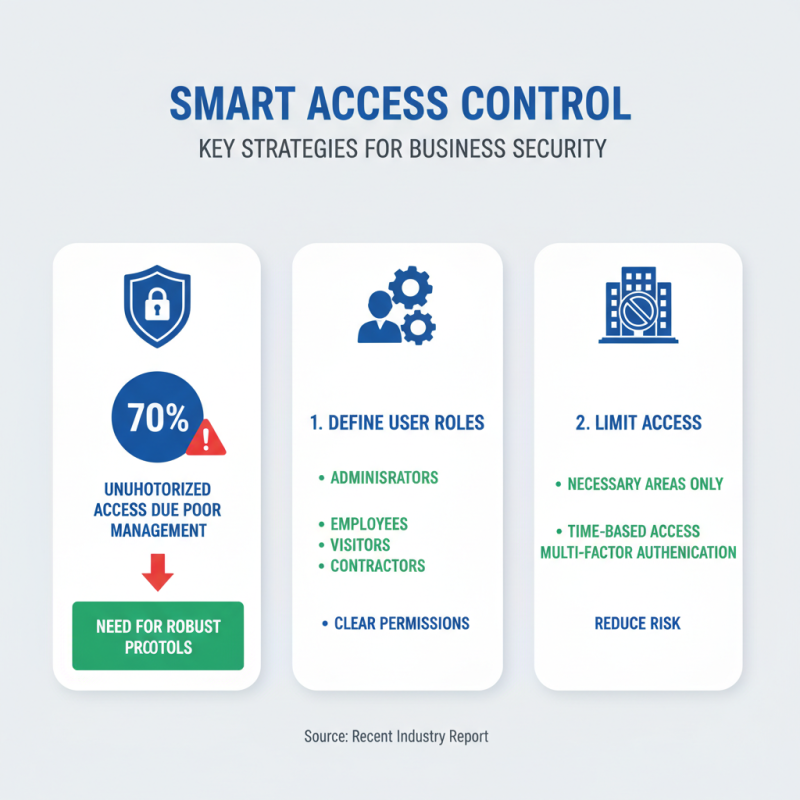
Conducting a risk assessment can reveal gaps in your security strategy. For instance, recent studies show that 43% of data breaches involve small businesses due to insufficient access controls. It’s vital to analyze both internal and external threats. Are your employees trained in security protocols? Do you have policies regarding access to sensitive areas? These questions can lead to actionable insights.
Technology solutions evolve rapidly. Organizations must remain adaptive. Many companies underestimate the importance of regularly reviewing their access control systems. Obsolete systems can lead to vulnerabilities. Additionally, employee turnover can shift security dynamics, making it necessary to reassess needs frequently. Addressing these challenges head-on can greatly enhance overall security posture.
How to Choose the Best Access Control Solutions for Your Business? - Assessing Your Business Needs: Identifying Security Requirements
| Business Size |
Security Level |
System Type |
Integration Capability |
Cost Estimate |
| Small Business |
Low |
Cloud-Based |
High |
$500 - $1,500 |
| Medium Business |
Medium |
On-Premise |
Medium |
$1,500 - $5,000 |
| Large Business |
High |
Integrated System |
Low |
$5,000 - $20,000 |
| Enterprise |
Very High |
Customized Solution |
Very High |
$20,000+ |
Evaluating Different Types of Access Control Systems Available
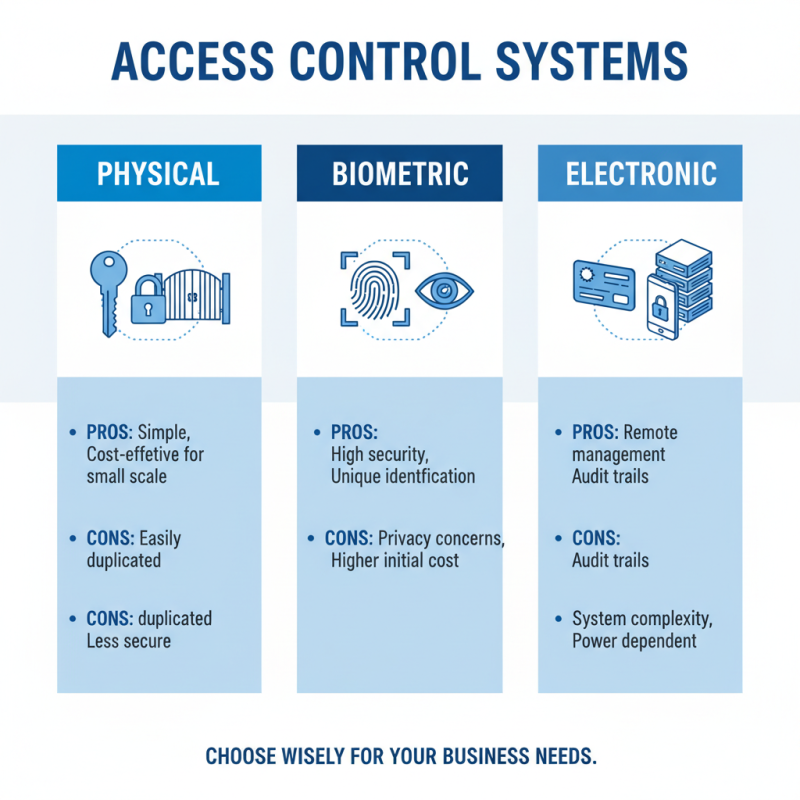
Evaluating access control systems requires careful consideration. There are three main types: physical, biometric, and electronic access control. Each has its pros and cons, which can be crucial for your business.
Physical access control often involves locks and keys. While simple and cost-effective, this can be problematic. Keys can be lost or stolen. It’s hard to track who has access. Biometric systems, using fingerprints or retinal scans, enhance security greatly. However, they can be expensive and may not work well for everyone.
Electronic access systems offer flexibility. You can use keycards or mobile apps. This type allows for easy monitoring and changes. However, they rely heavily on technology. System failures can lead to access issues. The user experience can vary widely. Choosing the right solution means understanding your specific needs and the limitations of each system.
Factors to Consider When Choosing Access Control Features and Technology
Choosing the right access control solutions for your business is vital. With numerous features and technologies available, the decision can be overwhelming. It's essential to consider key factors that will align with your business needs.
According to a recent report by IDG, 75% of organizations prioritize security features when selecting an access control system. This indicates that businesses must assess their specific security threats.
Integration capabilities should also play a crucial role in the decision-making process. Many systems offer compatibility with existing technologies, including surveillance cameras and alarms. Research shows that an integrated approach can enhance overall security by 65%. However, some businesses may overlook how these integrations can impact operations. It’s not just about adding features; it’s about ensuring they work seamlessly together.
User experience cannot be neglected either. A complicated access control system can hinder employee productivity. In fact, 58% of users report frustration with their access control interfaces. This suggests that systems should balance security with ease of use. Finding the right features often involves testing and feedback. Businesses should remain open to adapting their choices based on employee needs and evolving security challenges.