How to Choose the Right Access Systems for Your Business Needs
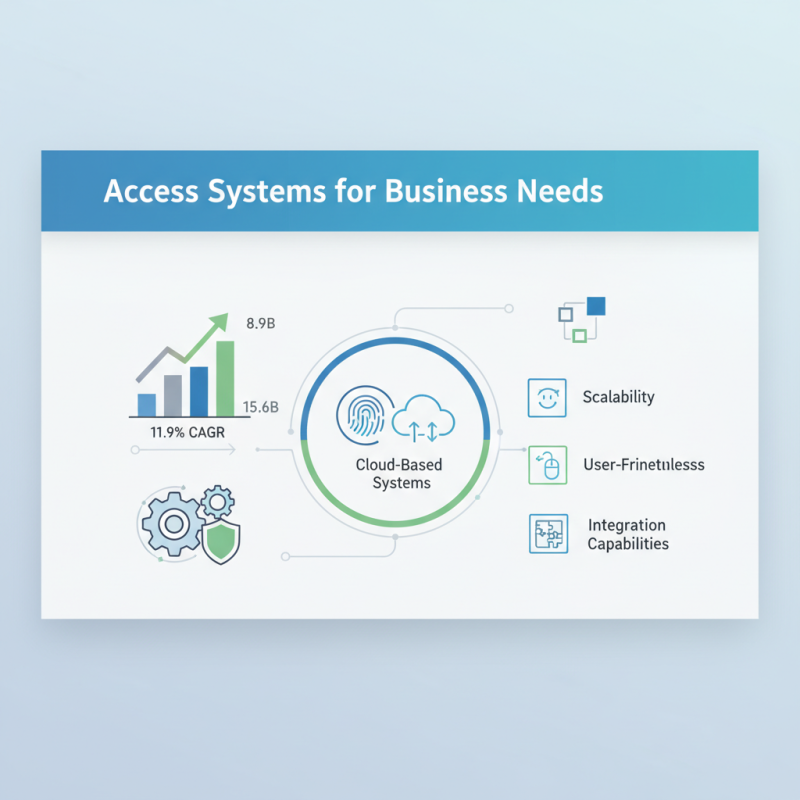
In today's rapidly evolving business landscape, choosing the right Access Systems is crucial for ensuring both security and operational efficiency. According to a report by MarketsandMarkets, the global access control market is projected to grow from USD 8.9 billion in 2023 to USD 15.6 billion by 2028, reflecting a compounded annual growth rate (CAGR) of 11.9%. This staggering growth underscores the increasing importance businesses place on securing their premises and assets through advanced technology.
Expert in the field, Dr. Emily Carter, a prominent access control systems specialist, emphasizes the critical nature of this decision. She states, "Selecting the appropriate Access Systems can not only safeguard physical assets but also enhance the overall workflow within an organization." This highlights that the choice of access systems is not merely a matter of security; it interlinks with operational efficiency and employee productivity.
As businesses assess their unique requirements, understanding the various options available, from biometric solutions to cloud-based systems, becomes essential. In navigating these options, it is beneficial for organizations to consider factors such as scalability, user-friendliness, and integration capabilities to align with their specific business needs and ensure sustainable growth.
Understanding Access Systems: Importance for Business Operations
Access systems play a crucial role in safeguarding a business’s assets while enabling efficient operations. These systems control who can enter specific areas within an organization, ensuring that sensitive information and high-value equipment remain secure from unauthorized access. By implementing a robust access system, businesses can establish clear protocols for employee and visitor entry, thereby reducing the risk of theft, data breaches, and other security threats. This aspect is particularly vital for sectors that handle confidential data, providing peace of mind for both business owners and employees.
Understanding the importance of access systems also extends to optimizing daily operations. A well-designed access control system can streamline workflow by allowing authorized personnel easy access to necessary areas while restricting others. This balance not only enhances security but also promotes a more organized environment where tasks can be performed without unnecessary delays. Additionally, modern access systems often come equipped with advanced features such as digital tracking and reporting, which provide valuable insights into employee movement and facility usage. Ultimately, prioritizing the right access system can significantly contribute to both the security and efficiency of business operations.
Types of Access Systems: Exploring Options Available for Businesses
When businesses consider integrating access systems, it is essential to explore the variety of options that cater to different operational needs. Access control systems generally fall into three primary categories: mechanical locks, electronic access systems, and biometric solutions. According to a report from MarketsandMarkets, the global access control market is projected to reach USD 12.91 billion by 2025, highlighting the growing demand for advanced security solutions. Traditional mechanical locks offer reliability but may lack the flexibility and enhanced security features that electronic systems can provide.
Electronic access systems utilize technologies such as key cards, PIN codes, or mobile credentials to control access. These systems not only streamline the entry process but allow for easier monitoring and audit trails, essential for businesses with heightened security concerns. A study by the Security Industry Association indicates that approximately 37% of businesses are moving towards electronic access management for its scalability and customization options, particularly important for organizations operating in dynamic environments. Additionally, biometric systems, which use fingerprints or facial recognition, are making significant inroads, especially in high-security areas, with a projected CAGR of 20.4% from 2020 to 2025, according to a report by Grand View Research.
In summary, evaluating the variety of access systems available means understanding each solution's strengths and suitability for specific business environments. The data tends to reflect a trend towards integrating more sophisticated electronic and biometric solutions as businesses increasingly prioritize security and efficiency within their operational frameworks.
How to Choose the Right Access Systems for Your Business Needs
| Access System Type |
Description |
Key Features |
Suitable For |
| Key Card Systems |
Electronic access using a card with a magnetic strip or RFID. |
Easy to issue/terminate, customizable access rights, track logs. |
Offices, hotels, schools. |
| Biometric Systems |
Uses unique physical characteristics for access, such as fingerprints or facial recognition. |
High security, eliminates credential sharing, quick access. |
Research labs, government buildings, high-security areas. |
| Intercom Systems |
Audio/video communication systems that allow verification before granting access. |
Two-way audio, video capabilities, remote access. |
Apartment complexes, offices, gated communities. |
| Keypad Entry Systems |
Access using a numeric code entered on a keypad. |
Cost-effective, easy to install, no physical keys. |
Retail stores, small businesses, warehouses. |
| Mobile Access Systems |
Users access premises using a mobile app on their smartphones. |
Convenience, capability to manage access remotely, integration with other systems. |
Modern offices, event venues, coworking spaces. |
Assessing Security Needs: Evaluating Risks and Vulnerabilities
When choosing the right access systems for your business, it’s essential to start with a thorough assessment of your security needs. According to a recent report from the Identity Theft Resource Center, businesses that evaluate their security risks regularly are 30% less likely to experience a data breach. This statistic underscores the importance of identifying vulnerabilities within your operational structure. Begin by conducting a risk assessment that involves mapping out all potential entry points, staff access levels, and sensitive information handling practices.
Tips: Regularly update your security policy to reflect any changes in your business model or personnel. Engage employees in security training sessions to ensure they are aware of best practices and the importance of maintaining a secure environment.
Another critical aspect is to consider the specific vulnerabilities that your business may face. For instance, a study from the Ponemon Institute found that human error accounts for 32% of all data breaches. With this in mind, implementing an access control system that limits user permissions based on their roles within the organization can significantly reduce risk. Each access granted should be well-justified and regularly reviewed to adapt to evolving threats.
Tips: Utilize multi-factor authentication for enhanced protection. This extra layer of security can prevent unauthorized access even if passwords are compromised.
Access Systems Security Needs Assessment
Budget Considerations: Balancing Cost and Functionality in Access Systems
When selecting the appropriate access systems for a business, budget considerations play a critical role in ensuring both cost-effectiveness and operational efficiency. According to a recent report by the Security Industry Association, nearly 75% of companies cite budget constraints as a primary factor influencing their access control choices. This highlights the necessity for businesses to strike a delicate balance between functionality, scalability, and affordability. By evaluating current and anticipated needs, organizations can determine which features are essential, allowing them to avoid overspending on unnecessary capabilities.
Investing in advanced access systems often involves weighing the initial expenditure against long-term benefits. A study by IHS Markit suggests that businesses that invest in comprehensive access control solutions can reduce unauthorized entry incidents by up to 30%, translating to significant cost savings relating to property damage and liability claims. Therefore, adopting a strategic approach to budgeting—such as considering total cost of ownership (TCO) rather than just upfront costs—can empower businesses to make informed decisions that align with their financial capabilities while still enhancing security measures. Balancing cost and functionality is crucial for establishing a robust access control strategy that meets both current business demands and future growth aspirations.
Integration and Scalability: Ensuring Future-Proof Access Solutions
When selecting access systems for your business, integration and scalability should be at the forefront of your decision-making process. The ability to seamlessly integrate new systems with existing infrastructure is crucial for ensuring that the transition is smooth and does not disrupt operations. A well-integrated access solution will allow for improved data flow and communication across your organization, thereby enhancing overall efficiency. It's essential to evaluate how new access technologies will work together with your current systems, ensuring compatibility and minimizing the need for extensive retraining.
Moreover, scalability is vital in a rapidly evolving business environment. As your organization grows, your access systems must be able to expand and adapt accordingly. This means choosing solutions that can accommodate increasing user numbers and evolving security needs without requiring a complete overhaul of your infrastructure. Opt for systems that allow for modular upgrades and are designed with future growth in mind, which not only protects your initial investment but also provides a framework for ongoing enhancement as your business needs change. This foresight will enable your organization to remain competitive, agile, and secure in the face of new challenges.