How to Choose the Right Hard Steel Plate for Your Needs?
Choosing the right hard steel plate for your needs can significantly impact your project's success. The hard steel plate industry is projected to reach a market value of $20 billion by 2025, according to a recent report by Global Industry Analysts. This growth underscores the importance of selecting the right materials.
Industry expert Dr. Emily Carter states, "The right hard steel plate combines strength and durability. Always assess the application before purchasing." Understanding the specific requirements for hardness, tensile strength, and thickness is crucial. Different applications, such as manufacturing machinery or construction, have unique demands. Thus, a deeper analysis is often necessary.
Inadequate understanding of these factors can lead to costly mistakes. In some cases, choosing the wrong plate may result in equipment failure or safety hazards. It's essential to invest time in research and consult with professionals. By doing so, you can ensure that your selection aligns with your project’s specific needs.
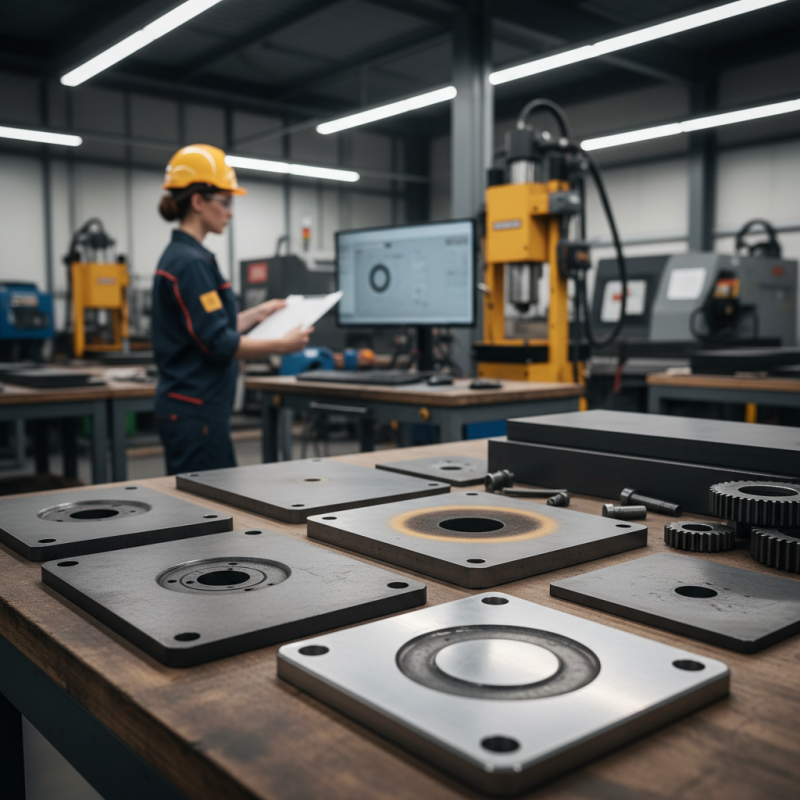
Understanding Hard Steel Plate Types and Their Properties
When selecting a hard steel plate, understanding its types and properties is crucial. Hard steel plates come in various grades, each tailored for specific applications. For example, high-carbon steel is often selected for its strength and wear resistance. In contrast, alloy steels combine different elements to enhance toughness and corrosion resistance. Knowing these differences will help in making an informed choice.
Tips: Always assess your project requirements carefully. Consider factors like load-bearing capacity and environmental conditions. Sometimes, the most robust option may not be the best choice for your needs.
Hardness is one property to evaluate. The Rockwell and Brinell scales can provide insights. A high score on these scales usually indicates excellent abrasion resistance. However, harder plates may be more challenging to work with. It's essential to balance hardness with machinability for your specific tasks.
Tips: If unsure, consult with suppliers or industry experts. They can guide you toward the right material based on experience. Additionally, testing a sample plate before making a bulk purchase is a wise move.
Assessing Your Project Requirements and Specifications
When selecting a hard steel plate for your project, understanding your specifications is crucial. Start by identifying the load the plate needs to bear. Will it be subjected to extreme conditions? Knowing the environment helps in choosing the right grade. For example, some plates perform better in high temperatures, while others resist wear and tear.
Think about thickness and size. A thicker plate can provide more strength, but is it necessary? Sometimes, a lighter option can suffice. Always check industry standards relevant to your project. This ensures you're on the right track and not overlooking vital details.
Don't overlook fabrication methods. How will the plate be cut or drilled? Different steel compositions can behave unexpectedly under certain conditions. Consider your suppliers’ capabilities and their previous work. Experience matters; you want a provider that understands your specific needs. It's easy to assume you know what you want, but be prepared to rethink your options as you gather more information.
Evaluating Thickness, Weight, and Durability Factors
Selecting the right hard steel plate involves careful consideration of thickness, weight, and durability. Each factor impacts not just performance but also the overall efficiency of the application. For instance, a thicker plate may provide more strength but could increase weight significantly. Choosing an improper thickness can compromise structural integrity.
Weight is another crucial aspect. Heavy plates are often more durable but can limit mobility and handling. In contrast, lighter plates are easier to work with but may not withstand heavy loads. It's essential to find a balance that suits your specific needs.
Tip: Always consult with a knowledgeable supplier. They can provide insights based on your application. Additionally, consider the environment where the plate will be used. Corrosive environments may require special coatings or treatments.
Durability is paramount. Plates need to withstand wear and tear without succumbing to damage. Understand the conditions your plate will face. This includes temperature fluctuations, exposure to chemicals, and mechanical stress. By assessing these aspects, you can make a more informed choice.
Tip: Review case studies or industry guidelines. These resources can help identify potential pitfalls. Be prepared for unexpected outcomes, and plan for maintenance to extend the life of your steel plates.
Comparing Cost, Availability, and Supplier Options
Choosing the right hard steel plate involves careful consideration of cost, availability, and supplier options. Recent industry reports indicate that prices can vary significantly based on the grade and thickness of the steel. For instance, high-strength low-alloy (HSLA) plates generally cost between $0.60 to $1.20 per pound, while ultra-high-strength variants can exceed $2.00 per pound. This highlights the necessity for buyers to clearly define their budget before making a decision.
Availability is another key factor. Industry trends show that supply chain disruptions can impact lead times. A survey by the American Iron and Steel Institute (AISI) noted that some regions experienced delays of 4-6 weeks for specific grades. Understanding the local market and maintaining relationships with multiple suppliers can mitigate these risks. Additionally, it is wise to evaluate each supplier’s track record. Online reviews and industry certifications can offer insights into reliability and quality.
Reflecting on supplier options, the decision may not always be straightforward. Local suppliers may offer quicker turnaround times, while international suppliers might present cost advantages. However, importing can complicate logistics and increase potential risks. Balancing these factors with your specific project demands is essential. It’s worth asking for samples or previous work references to ensure quality meets expectations.
How to Choose the Right Hard Steel Plate for Your Needs? - Comparing Cost, Availability, and Supplier Options
| Steel Plate Type | Cost per Ton ($) | Availability (Days) | Supplier Rating (1-5) |
| A36 Steel Plate | 600 | 5 | 4 |
| AR400 Steel Plate | 750 | 7 | 5 |
| AR500 Steel Plate | 800 | 10 | 4 |
| Wear Resistant Steel Plate | 850 | 12 | 3 |
| High Carbon Steel Plate | 700 | 8 | 4.5 |
Reviewing Industry Standards and Certification for Hard Steel Plates
When selecting a hard steel plate, understanding industry standards is crucial. Various certifications indicate quality and performance. The American Society for Testing and Materials (ASTM) is one such organization. They set guidelines for hardness testing and material properties. High-quality plates often have certifications from recognized bodies.
Different industries prioritize specific features. For example, military applications may focus on ballistic resistance. In contrast, construction needs durability and weight concerns. Some standards are not as stringent, leading to variability in quality. Always ask for material certificates before purchase. This step can help prevent costly mistakes.
Hard steel plates come in various grades and finishes. Buyers should know their intended use. Some grades may not perform well under extreme conditions, while others excel. Take time to think about how the material will be used. This can ensure the selection meets the required safety and performance standards.