
7 Tips to Choose the Best Can Shaped Cooler Box

Choosing the right Can Shaped Cooler Box sounds simple, but small details often decide whether it performs well outdoors. A cooler may look attractive online, yet its insulation, zipper quality, and internal space can feel different in real use. I have learned that a compact design is useful for beaches, road trips, sporting events, and crowded picnic tables. However, convenience should not replace practical testing.

This guide presents seven useful tips for making a more confident choice. We will examine insulation performance, capacity, materials, portability, cleaning, durability, and overall value. A reliable Can Shaped Cooler Box should keep cans cold for hours without becoming awkward to carry. It should also resist light moisture, hold its shape, and offer enough room for ice packs. Measure your usual drink cans before buying. That small step prevents disappointment.

Look closely at the stitching and handle attachments. Weak seams can fail after repeated lifting, especially when the box is fully loaded. Check whether the lining wipes clean after spills. It sounds minor. It matters.

No cooler is perfect, and marketing claims can sometimes create unrealistic expectations. Cooling time depends on weather, opening frequency, ice-pack quality, and how full the box is. Therefore, the best choice should match your actual routine, not an impressive product photograph. These practical tips combine everyday experience with basic product evaluation, helping you choose a cooler that remains useful beyond its first outing.
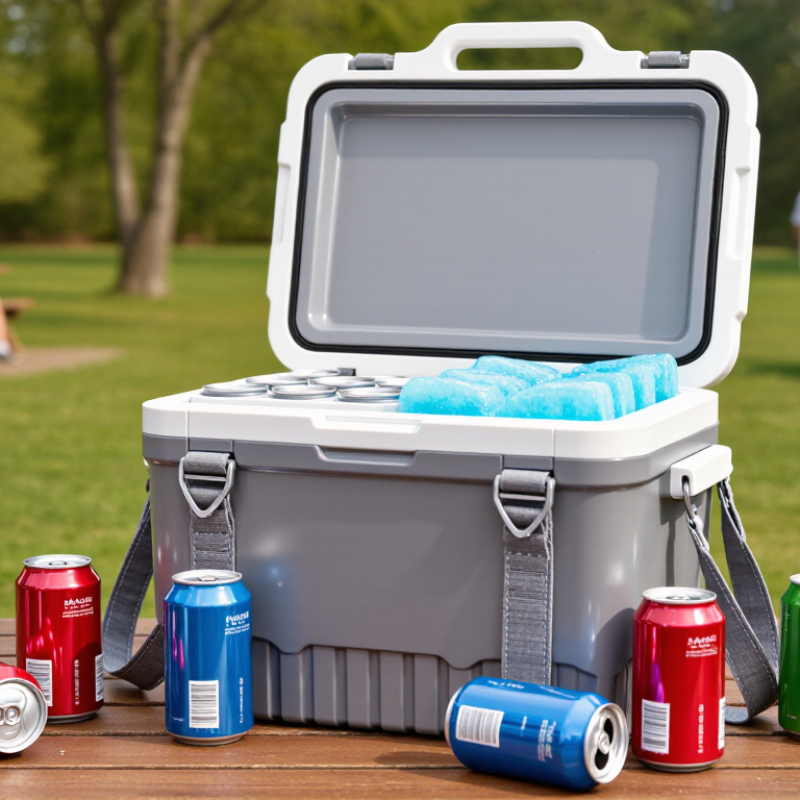
7 Tips to Choose the Best Can Shaped Cooler Box

Define Capacity: Fit 355 mL Cans, Ice, and a Practical 6–12-Can Load

Capacity should be judged by real use, not by the largest number on the label. A 355 mL can needs room around it, especially when the cooler has thick insulation. Measure the interior space before buying. Then compare it with your usual drink size.

A practical six-can load leaves space for ice and easier access. Pack six cans upright, add loose ice, and check whether the lid closes without pressure. For twelve cans, the arrangement becomes tighter. Ice may need to sit above or between the cans, reducing usable capacity. This estimate can be optimistic.

I have found that a 6–12-can cooler suits short outings better than large group events. Use a tape measure, not guesswork. Check the base width, internal height, and opening size. A narrow opening may fit cans inside but make loading frustrating. Test with cans at home if possible.

Choose ice carefully. Cubes cool quickly but waste space; small ice fills gaps more efficiently. Leave a little room for drainage and movement. A fully packed cooler can become heavy, awkward, and less convenient to carry. I once chose maximum capacity and regretted it after a long walk. The smaller load was more practical.

7 Tips to Choose the Best Can Shaped Cooler Box - Define Capacity: Fit 355 mL Cans, Ice, and a Practical 6–12-Can Load

Capacity Profile 355 mL Can Load Recommended Ice Space Approx. Internal Volume Suggested Use Key Measurement to Check Practical Selection Tip
Compact Personal 6 cans 1.0–1.5 L of loose ice or 2–3 reusable ice packs About 5–7 L One person, short commute, lunch break, or day trip Interior width of at least 16 cm and interior height of at least 18 cm Choose this size when portability matters more than maximum cooling time.
Balanced Everyday 8 cans 1.5–2.5 L of loose ice or 3–4 reusable ice packs About 7–9 L Small picnic, park visit, beach outing, or shared lunch Interior width of at least 18 cm and usable height of at least 20 cm Allow space around the cans so cold air and ice can circulate effectively.
Family Day-Trip 10 cans 2.5–3.5 L of loose ice or 4–5 reusable ice packs About 9–12 L Family outings, sporting events, road trips, or longer outdoor use Interior width of at least 20 cm and usable height of at least 22 cm Check the opening size, because a tall narrow opening can make loading and cleaning difficult.
Maximum Practical Load 12 cans 3.0–4.5 L of loose ice or 5–6 reusable ice packs About 12–16 L Group refreshments, full-day events, camping, or tailgating Interior width of at least 22 cm and usable height of at least 24 cm Confirm that the listed capacity includes space for ice; a can-only rating may overstate usable capacity.

Capacity estimates assume standard 355 mL beverage cans measuring approximately 66 mm in diameter and 122 mm in height. Actual usable capacity varies with the cooler's shape, insulation thickness, zipper construction, ice type, and internal pockets.

Compare Insulation: Check Foam Density, R-Value, and 24–48-Hour Ice Tests

A can-shaped cooler box may look compact, but insulation determines its real performance. Check the foam density before trusting the exterior design. Denser foam usually resists compression and limits heat transfer more effectively. However, density alone cannot predict ice retention. R-value shows how strongly the insulation resists heat flow. Compare R-values only when testing methods and material thickness are similar. A high number can mislead when the walls are thin or poorly sealed. Inspect the lid, seams, and drain area closely. Tiny gaps matter.

Use a practical 24–48-hour ice test. Add the same ice weight each time, then record the internal temperature and melted water. Keep the cooler in shade. Avoid opening it repeatedly. Record the outdoor temperature too. A test performed at 20°C is not equal to one performed under hot sunlight. If a product only claims “48-hour cooling,” the evidence is incomplete. Ask how much ice remained solid.

In my own checks, thick foam helped, but the lid seal often decided the final result. The can-shaped body also left less room for awkward bottles, which reduced packing efficiency. That was easy to overlook. My testing was not perfect; opening the lid changed the readings. Repeat the test under controlled conditions. Compare ice retention, usable space, and temperature stability together. A cooler that keeps ice longer may still disappoint during daily use.

Verify Fit and Portability: Measure Can Diameter, Packed Size, and Empty Weight

Choosing a can-shaped cooler box starts with fit, not appearance. A narrow body may look efficient, yet it can reject your preferred cans. Measure one can’s widest diameter, including the rim. Then compare it with the cooler’s internal width, not its advertised outer width. Leave a few millimeters for easy removal. Tight fits become frustrating with cold, wet hands. Check the internal height too. Some containers need extra room for ice or a protective sleeve.

Tip 1:

Test the packed size before ordering. Measure the cooler when folded, collapsed, or packed for storage. Record its length, width, and thickness. Place those numbers beside your backpack pocket, car compartment, or picnic basket. I once ignored the packed thickness and lost useful trunk space. That mistake changed my buying checklist. Product drawings can be optimistic, so ask for measured dimensions when tolerances matter.

Tip 2:

Weigh the empty cooler with its strap and removable parts attached. Empty weight affects every walk, especially when cans and ice are added. A difference of 300 grams feels small in a shop. It feels different after an hour outdoors.

Tip 3:

Check the opening by hand, if possible. The right cooler should hold cans securely without forcing them out. My measurements were not perfect; I should have allowed more clearance. Recheck them with the actual cans, ice packs, and lid closed. A realistic trial is more reliable than a neat specification sheet.

Audit Safety: Confirm FDA 21 CFR 177 or EU 1935/2004 Food-Contact Compliance

7 Tips to Choose the Best Can Shaped Cooler Box

Audit safety before judging insulation, appearance, or capacity. FDA 21 CFR 177 covers specific food-contact substances, not every cooler box. Request the exact regulation section for each liner, seal, coating, and adhesive. A vague “FDA approved” statement is weak evidence. Ask for migration-test reports, material declarations, batch traceability, and laboratory accreditation. Keep the documents.

For European sales, check Regulation (EC) No 1935/2004. Article 3 requires materials to avoid harmful transfer, unacceptable taste, or food-quality changes. The box should also follow Regulation (EC) No 2023/2006 on good manufacturing practice. Test samples should reflect real use: cold temperatures, condensation, repeated opening, and direct contact with cans or leaked drinks. One clean laboratory result may not represent the finished product.

Look closely at the inner surface. It should feel smooth, odor-free, and easy to wash. Check seams and corners, where residue can hide. The OECD’s Global Plastics Outlook reported 353 million tonnes of plastic waste in 2019. That figure reinforces the need for durable, traceable materials, not disposable-looking liners. Reusable does not automatically mean safe.

A certificate is not enough.

The awkward part is often missing evidence. Suppliers may provide a resin declaration but omit ink, glue, foam, or zipper components. I would record these gaps instead of guessing. A qualified third-party laboratory can confirm overall migration, specific migration, and repeated-use performance before purchase.

Assess Durability: Compare Leakproof Seams, Zippers, Materials, and Warranty Terms

A can-shaped cooler may look simple, but its seams decide whether your drink stays cold and your car stays dry.

The U.S. Bureau of Economic Analysis reported that outdoor recreation generated $1.1 trillion in 2022. That scale reflects frequent, demanding use. Check every seam closely. Heat-welded joints usually remove needle holes, while stitched seams need strong thread and sealed tape.

$1.1 trillion

The U.S. Bureau of Economic Analysis reported that outdoor recreation generated $1.1 trillion in 2022.

Ask whether leakproof claims come from controlled testing, not only product photos. A practical test helps: fill the cooler with water, place it on a dry towel, and inspect it after ten minutes.

Zippers deserve equal attention.

Run the slider around corners several times; resistance can reveal poor alignment. Look for a covered or water-resistant zipper, but remember that “water-resistant” is not “fully leakproof.”

Materials also need context. A higher-denier outer fabric can resist abrasion, yet coating quality and liner thickness matter more than one number.

The 2023 Outdoor Recreation Roundtable report highlights continued growth in outdoor participation, so repeated carrying and rough surfaces should influence your choice.

Warranty terms expose overlooked weaknesses. Check coverage length, seam exclusions, repair options, and whether proof of purchase is required.

Some warranties sound generous. Read the small print.

I would also question absolute durability claims, because UV exposure, freezing temperatures, and overpacking can shorten any cooler’s life.

Go to Top