
What Is Dihydroberberine Powder Used For?

Dihydroberberine Powder is commonly marketed for metabolic support, especially blood-glucose and lipid management. It is a reduced form of berberine, often promoted as easier to absorb. That promise deserves careful scrutiny. Research on dihydroberberine in people remains limited, and results from berberine studies cannot automatically be applied to it.

Dr. Pieter Cohen, an associate professor at Harvard Medical School who studies dietary supplements, has raised broader concerns about supplement quality and evidence. A cautious paraphrase of that principle is: “A label alone cannot prove a supplement is safe or effective.” It is a useful reminder here, not a verified direct quote about dihydroberberine. Products can differ in purity, dose, and testing. The fine print matters.

This guide looks at what Dihydroberberine Powder is used for, what current research can—and cannot—support, and what to check on a product label. We will distinguish measured findings from marketing language, including claims about absorption. A plausible mechanism is not a proven benefit. Not yet. Anyone considering a supplement, especially while taking medication or managing a health condition, should discuss it with a qualified healthcare professional. Even the label “natural” settles very little. That may be an imperfect starting point, but it is more honest than treating early research as a promise.
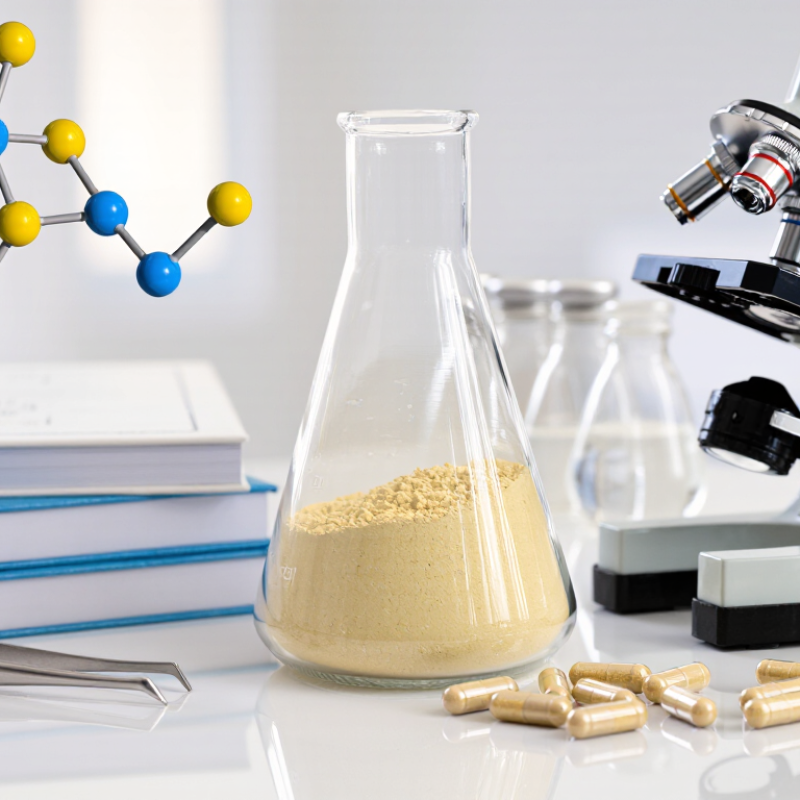
What Is Dihydroberberine Powder Used For?

What Is Dihydroberberine Powder?

Dihydroberberine powder is a powdered form of dihydroberberine, a reduced derivative of berberine, a compound found in plants such as barberry. The two compounds are related, but they are not identical. Researchers have investigated whether dihydroberberine is absorbed differently before the body converts it into berberine. Evidence remains limited, especially in humans. A lab result is not a health outcome.

The powder’s appearance and concentration can vary by supplier, so a useful specification includes the dihydroberberine assay, serving size, and a batch-specific certificate of analysis. That certificate should also report testing for heavy metals and microbes. The U.S. National Center for Complementary and Integrative Health notes that human berberine studies have used roughly 500–1,500 mg per day; those amounts refer to berberine, not dihydroberberine powder. The distinction matters. They should not be treated as equivalent doses. I would not infer a personal dose from the label alone, since human evidence for dihydroberberine remains sparse. Discuss use with a qualified healthcare professional, particularly when taking medication.

How Does Dihydroberberine Differ from Berberine?

Dihydroberberine is a reduced form of berberine, a plant-derived alkaloid often sold as a dietary supplement. Berberine has been studied for effects on blood sugar and blood fats, but research does not establish it as a replacement for medical care. The two compounds are related, but they are not identical.

Berberine is the form used in most clinical research. Dihydroberberine may be absorbed differently; early studies suggest it could enter the bloodstream more readily in some conditions. That distinction matters. Better absorption, however, does not automatically mean better health results or a lower effective dose. Evidence comparing their long-term effects in people remains limited, and the body may convert dihydroberberine back into berberine. Results can also depend on the product and individual metabolism.

If considering either supplement, review it with a qualified healthcare professional, especially when taking medicines for blood sugar or other conditions. Berberine can interact with some medications and may cause digestive effects. Dihydroberberine is less studied, so its safety profile is less certain. Supplement labels may not tell the whole story. A careful discussion is more useful than assuming the newer form is automatically superior.

How Does Dihydroberberine Work in the Body?

What Is Dihydroberberine Powder Used For?

How Does Dihydroberberine Work in the Body?

Dihydroberberine, or DHB, is a reduced form of berberine studied for its absorption and effects on glucose metabolism. After absorption, it may convert back into berberine. Researchers have linked berberine with AMPK signaling, a pathway involved in how cells use energy. It may also influence glucose production in the liver and glucose uptake in tissues. The precise sequence is still being studied.

Not fully settled.

Human evidence for berberine is broader than evidence for DHB itself. A 2022 meta-analysis in Frontiers in Pharmacology reviewed 37 clinical trials involving 3,048 participants and reported improved blood-glucose measures with berberine. Those findings cannot automatically be applied to DHB. Small pharmacokinetic comparisons suggest DHB may produce higher circulating berberine levels, but they do not establish long-term benefits. That distinction matters. Supplements can also interact with medicines, and individual responses vary. Anyone managing blood sugar or taking medication should discuss DHB with a qualified healthcare professional.

What Is Dihydroberberine Powder Commonly Used For?

What Is Dihydroberberine Powder Commonly Used For?

Dihydroberberine powder is commonly used in supplements marketed for metabolic health, especially support for healthy blood-glucose and lipid levels. It is a reduced form of berberine, but research on dihydroberberine itself remains limited. It is not a substitute for prescribed care. The International Diabetes Federation’s 2021 Diabetes Atlas estimated that 537 million adults were living with diabetes worldwide; that figure describes disease prevalence, not evidence that this supplement treats it.

Some people choose it as part of a broader routine that includes meals, activity, and health monitoring. The Council for Responsible Nutrition’s 2023 Consumer Survey reported that 74% of U.S. adults used dietary supplements. That figure reflects supplement use overall, not dihydroberberine specifically. The distinction matters. A powder stirred into a drink may seem simple, yet product quality, dose, and individual response can vary. Evidence is still uneven, and marketing language can run ahead of clinical data. Anyone taking glucose-lowering medicine or managing a health condition should discuss use with a qualified health professional.

What Are Its Safety Considerations and Evidence Limits?

Dihydroberberine is a supplemental form related to berberine, often marketed for blood-sugar and metabolic support. The safety evidence is much thinner than the marketing language may suggest. A 2022 systematic review pooled 37 randomized trials involving 3,048 participants, but examined berberine—not dihydroberberine. Those results cannot establish that dihydroberberine works equally well or safely.

That distinction matters. Human studies of dihydroberberine remain limited, and findings from small or short trials cannot predict long-term effects. Possible digestive symptoms, such as nausea or constipation, deserve attention. Medication interactions matter, too. The U.S. National Center for Complementary and Integrative Health warns that berberine may interact with medicines, including drugs affected by liver enzymes. People taking prescription medicines should discuss use with a clinician before trying it.

Product labels may not answer basic questions about dose, purity, or actual ingredient content. Independent testing can help verify identity and contaminants, but it does not prove health benefits. Avoid use during pregnancy or breastfeeding, and do not give berberine-related supplements to infants; safety concerns include effects on bilirubin. If a product is being considered for glucose support, record the dose and any symptoms, and keep prescribed treatment unchanged unless a clinician advises otherwise.

What Is Dihydroberberine Powder Used For? — What Are Its Safety Considerations and Evidence Limits?

Topic What is known Evidence and practical limits
What it is Dihydroberberine (DHB) is a chemically reduced form of berberine, a plant-derived alkaloid. It is sold as an oral dietary supplement, including in powder form. DHB is not interchangeable with berberine on a milligram-for-milligram basis. Product composition and quality can vary.
Commonly promoted uses Supplements are commonly promoted for blood-glucose, lipid, or metabolic-health support, largely by analogy with berberine. Promotion is not proof of benefit. Evidence for berberine cannot automatically establish that DHB has the same effects or benefits.
Human evidence Human research on DHB itself is limited. Findings about absorption or short-term use do not establish that it prevents or treats disease. There is not enough high-quality, large, long-term clinical research to confirm reliable benefits, optimal dosing, or long-term safety for DHB.
Blood glucose Because berberine may affect glucose metabolism, a similar effect is sometimes proposed for DHB. A clinically meaningful glucose-lowering effect from DHB has not been established. It should not replace diabetes treatment or monitoring.
Possible side effects Safety information specific to DHB is sparse. Gastrointestinal symptoms such as nausea, abdominal discomfort, diarrhea, or constipation are possible, particularly given its relationship to berberine. The frequency and dose relationship of side effects for DHB are not well characterized. Stop use and seek medical advice if a serious reaction occurs.
Interactions Potential interactions are a concern, especially with medicines that lower blood glucose or blood pressure and with drugs affected by drug-metabolizing enzymes or transporters. The interaction profile of DHB is not fully defined. Ask a pharmacist or clinician to review all medicines and supplements before use; do not adjust prescription treatment on your own.
Pregnancy, breastfeeding, and infants There is insufficient safety evidence for DHB during pregnancy or breastfeeding, or for use in infants and children. Avoid use in these groups unless a qualified healthcare professional specifically advises otherwise. Berberine-containing products raise particular concerns for newborns.
Regulatory status and product quality In the United States, dietary supplements are not approved by the FDA to diagnose, treat, cure, or prevent disease before they are marketed. Labels do not guarantee purity, potency, or clinical effectiveness. Independent quality testing may help assess product contents but does not prove health benefits.
Bottom line Dihydroberberine powder is marketed for metabolic-health support, but evidence for specific health benefits and long-term safety remains limited. Discuss it with a healthcare professional, especially if you have a medical condition, take medication, or are pregnant or breastfeeding.
Go to Top