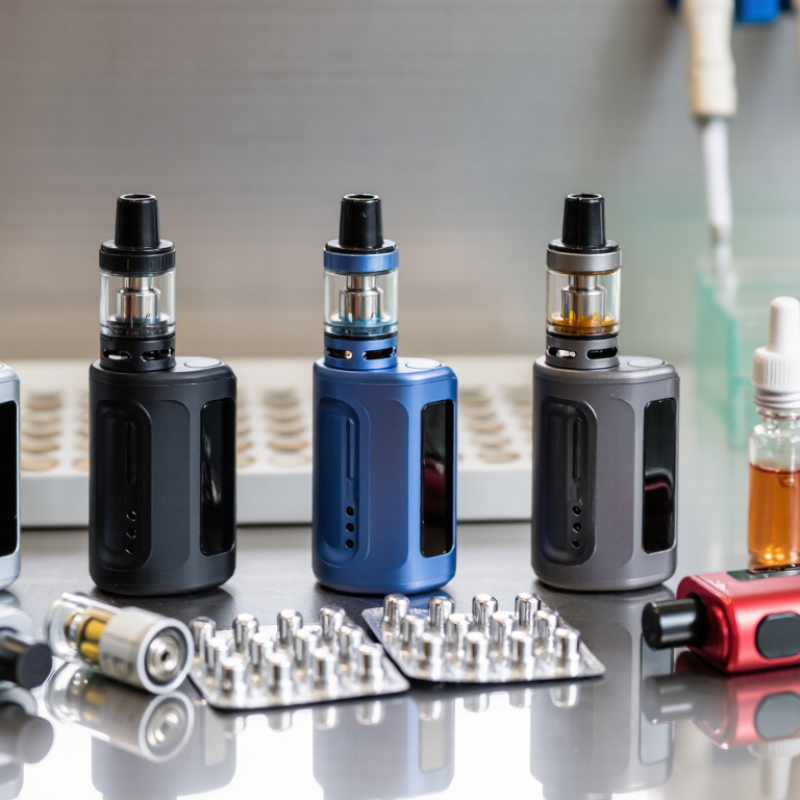
What Vaping Electronic Cigarette Standards Matter in 2026?

As 2026 approaches, Vaping Electronic Cigarette standards matter because small design choices can affect product consistency and consumer safety. A battery, liquid container, or label may look routine. Each still needs reliable testing. The World Health Organization’s 2024 report, Hooking the Next Generation, estimated that more than 100 million people worldwide use e-cigarettes, including at least 15 million adolescents aged 13–15. These figures are estimates, not a live census, but they show why product oversight deserves careful attention.

Standards can cover e-liquid composition, emissions testing, device performance, battery safety, packaging, and clear warnings. Requirements differ across markets, so a single certificate should not be treated as universal approval. In WHO guidance, Dr. Ruediger Krech, Director of Health Promotion, stated: “E-cigarettes are harmful to health and are not safe.” That warning makes transparent testing and accurate product information especially relevant. ISO methods, including those for e-liquid analysis, can support consistent testing; they do not replace local rules or independent review.

For buyers and manufacturers, the practical questions are concrete: Are ingredients documented? Are test methods disclosed? Can a device withstand ordinary use without overheating or leaking? Details matter. A standard can reduce uncertainty, not erase it. And compliance on paper is not proof that every product performs as intended. In 2026, credible standards will be those backed by traceable evidence, qualified testing, and updates as the science develops. That is a demanding benchmark, and the industry should keep asking whether its checks are enough.

What Vaping Electronic Cigarette Standards Matter in 2026?

Define 2026 Vape Standards: FDA PMTA, EU TPD, and ISO Frameworks

What Vaping Electronic Cigarette Standards Matter in 2026?

Define 2026 Vape Standards: FDA PMTA, EU TPD, and ISO Frameworks

In the United States, FDA’s Premarket Tobacco Product Application pathway requires manufacturers to submit scientific evidence for review. The agency considers a product’s effects on public health, including risks to users and nonusers.

A completed application is not the same as authorization. That distinction matters. In 2026, check current FDA decisions and guidance rather than relying on an old filing or a supplier’s claim.

In the European Union, the Tobacco Products Directive sets requirements for product notification, packaging, and nicotine-containing liquids. National rules can add details, so one checklist may not fit every market.

ISO standards offer another kind of framework: they can guide testing, terminology, and quality processes, but they are not government approval. A lab report should identify the tested sample and method. Look for traceable records, clear dates, and results tied to the actual product.

Paperwork can look tidy. The underlying evidence may still be incomplete. These systems overlap, but they do different jobs; treating them as interchangeable is an easy mistake.

Check EU TPD Limits: 20 mg/mL Nicotine and 2 mL Tank Capacity

For nicotine-containing e-cigarettes covered by EU rules, two limits are easy to check: nicotine liquid may not exceed 20 mg/mL, and tanks or cartridges may hold no more than 2 mL. These are product limits, not suggestions about how much someone should use. A label showing 20 mg/mL describes the liquid’s concentration; it does not describe the amount in the device.

Small details matter. A 2 mL tank can look larger when viewed through a curved shell, so check the stated capacity rather than judging by appearance. Read the packaging and product information together. Look for the nicotine strength, liquid volume, and clear identification of the intended device. If those details conflict, pause and ask a qualified retailer or check guidance from the relevant regulator.

In 2026, these figures remain useful checkpoints, but they do not answer every compliance question. National requirements and product rules can differ, and regulations may change. Check current official guidance for the country where the product is sold. I would not assume that a device is compliant just because its nicotine figure is below the limit; tank capacity, labeling, and other requirements matter too.

Assess E-Cigarette Battery Safety Against IEC 62133-2

In 2026, IEC 62133-2 remains a useful benchmark for assessing lithium-ion battery safety in portable devices. The standard covers cells and batteries under intended use and reasonably foreseeable misuse. Its tests include external short circuits, overcharging, vibration, mechanical shock, and thermal abuse. These conditions matter in a compact e-cigarette, where a damaged cell or poor electrical connection can create heat inside a small casing.

The U.S. Fire Administration’s 2017 review recorded 195 reported e-cigarette fire and explosion incidents from 2009 to 2016, with 133 injuries. These historical reports are not a complete measure of current risk. Still, they show why battery testing deserves attention. IEC 62133-2 test results apply to the tested cell or battery configuration; they do not automatically prove that a finished device is safe. A label alone can feel reassuring. It is not proof.

Tips: Ask for a test report matching the exact cell model and battery configuration. Check that the report identifies the laboratory, test date, and standard edition. Small details matter. A mismatch can leave a real gap.

Standardize Aerosol Testing With ISO 20768:2018 Vaping Machines

ISO 20768:2018 provides a defined way to generate aerosol from vaping products for routine analytical testing. A vaping machine controls key puffing conditions, including puff volume, duration, and interval. This gives laboratories a shared starting point when comparing measurements.

Consistency begins with setup. Check the machine’s flow path, seals, and calibration before testing. A small leak can change the collected aerosol. Record the device settings, sample conditioning, collection method, and any deviations. Repeat runs help reveal whether a result reflects the product or a setup problem. Small details matter.

The standard improves repeatability, but it does not reproduce every person’s use. Real puffing patterns vary, and one laboratory regimen cannot capture them all. That limitation deserves attention when interpreting results. ISO-based measurements are most useful when reports describe the method clearly and avoid treating one test condition as a complete picture of exposure.

What Vaping Electronic Cigarette Standards Matter in 2026? - Standardize Aerosol Testing With ISO 20768:2018 Vaping Machines

Testing dimension Relevant standard or reference What it provides Data to record or report Important limitation
Machine-generated aerosol collection ISO 20768:2018, Vapour products — Routine analytical vaping machine — Definitions and standard conditions Defines a routine analytical vaping-machine approach and standard puffing conditions. The standard puff profile uses a 55 mL puff volume, 3-second puff duration, and 30-second puff interval. Puff volume (mL), puff duration (s), interval (s), puff count, machine settings, device orientation, conditioning details, and collection method. These are standardized machine conditions, not a representation of every person’s vaping behavior. ISO 20768 does not set health-based exposure limits or certify a product as safe.
E-liquid composition ISO 20714:2019, E-liquids — Determination of nicotine, propylene glycol and glycerol … — Gas chromatographic method Specifies a gas chromatographic method for determining nicotine, propylene glycol, and glycerol in e-liquids. Analyte concentration, units, sample preparation, calibration details, replicate results, and applicable method performance information. This is a liquid-analysis method; it does not measure the amount of these substances delivered in aerosol or cover every e-liquid ingredient.
Laboratory competence ISO/IEC 17025:2017, General requirements for the competence of testing and calibration laboratories Sets requirements for laboratory competence, impartiality, and consistent operation. Accreditation is granted for a defined scope of testing. Laboratory accreditation status and scope, method identification, equipment calibration, quality-control results, and measurement uncertainty where applicable. Accreditation alone does not mean every vaping or aerosol test is within the laboratory’s accredited scope; verify the specific method and analytes.
Aerosol chemical analysis A validated, analyte-specific laboratory method used with a documented aerosol-generation and collection protocol Can be used to investigate selected aerosol constituents, such as nicotine, carbonyl compounds, or metals, depending on the method and study design. Analyte, result per puff or per collected sample, number of puffs, collection conditions, blanks, recovery, limit of detection, and limit of quantification. ISO 20768 standardizes machine conditions; it does not prescribe one universal chemical-analyte panel or a single analytical method for every aerosol constituent.
Comparability and quality control Documented test protocol aligned with ISO 20768:2018, plus laboratory quality-control procedures Makes results easier to interpret and compare by identifying the machine settings, sample handling, and analytical method used. Device and sample identifiers, conditioning, power or operating mode, consumable configuration, puffing parameters, replicate count, deviations, and QC outcomes. Comparisons are meaningful only when relevant test conditions and analytical methods are sufficiently similar and reported transparently.

Note: Standards specify methods or requirements within their stated scope. Applicable legal requirements vary by jurisdiction and should be checked separately.

Verify U.S. Market Access Through FDA Product-Specific PMTA Orders

In 2026, U.S. market access depends on more than a label or retailer listing. Check whether the FDA issued a marketing granted order for the exact product. The order applies to specified products, not automatically to every flavor, device, or version from the same manufacturer. That distinction is easy to miss. An FDA order is not a blanket safety certification; it is a product-specific regulatory decision.

The FDA reported 34 authorized e-cigarette products and devices by late 2024. That limited count makes exact verification important. Separately, CDC’s National Center for Health Statistics reported that 6.5% of U.S. adults used e-cigarettes in 2023. These figures describe authorization and use, not product safety or market eligibility in every situation. Read the underlying records. A database entry can be less clear than expected, and names may differ slightly across documents.

Tips: Search the FDA’s official marketing-granted orders database. Match the product name, manufacturer, flavor, and device against the order. Save a dated copy of the record for your files. If any detail does not match, pause and verify it with the FDA documentation rather than relying on a sales claim. Small details matter.

Article Source:

Go to Top