Best Organic Spirulina Suppliers in China
China’s spirulina sector includes producers, processors, and exporters serving different markets. For buyers, “Organic Spirulina” is only a starting point. A useful supplier review looks beyond a polished website or a low quotation. It checks where the algae is cultivated, how it is dried, and whether each batch can be traced through reliable records. Small details matter. A blue-green powder may look consistent while its documentation tells a more complicated story.
This guide explains how to compare organic spirulina suppliers in China using practical, verifiable criteria. Buyers should review the scope and validity of organic certificates, confirm that the named product and production site are covered, and request recent test reports from a qualified laboratory. Useful specifications include protein content, moisture, microbiological results, heavy metals, packaging, and shelf life. Ask how samples are matched to commercial batches. Ask about storage, too. Clear answers are reassuring; vague assurances deserve follow-up.
Price still matters, but it should not replace evidence. Minimum order quantities, lead times, shipping terms, and communication quality can affect the real cost of sourcing. No single supplier fits every buyer, and a document alone cannot prove consistent performance. That is worth remembering. The sections below offer a grounded way to build a shortlist and verify claims before placing an order.
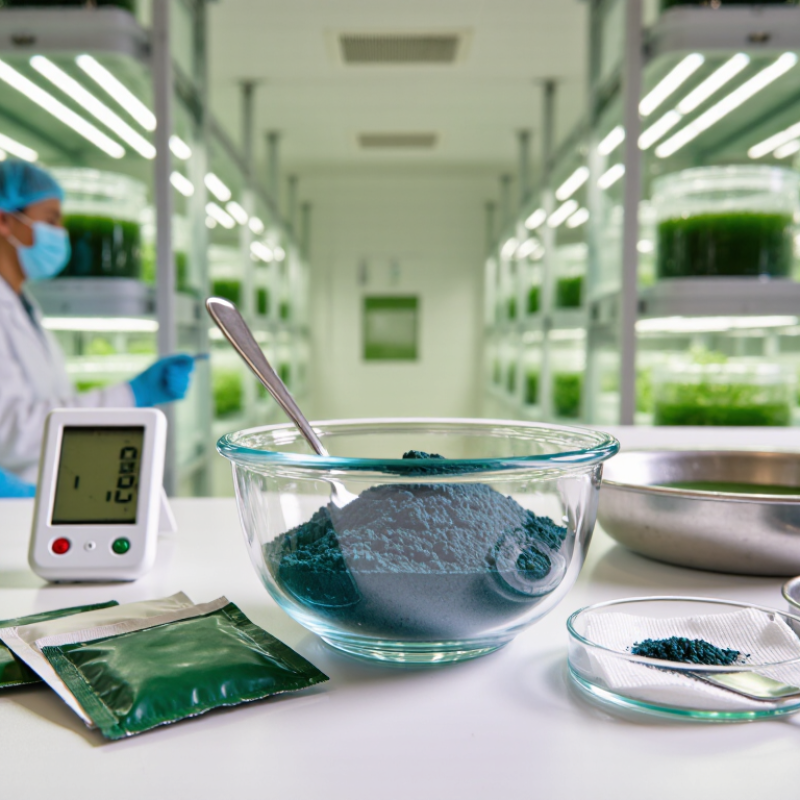
What Organic Spirulina Is and Why China Is a Major Source
Organic spirulina is dried biomass from cultivated Arthrospira, a cyanobacterium commonly marketed as blue-green algae. It grows in shallow, alkaline ponds where sunlight and warm temperatures support production. Organic status depends on the applicable certification rules, not on words like “natural” on a product page. That distinction is easy to miss.
China is a major source because its established cultivation and processing capacity supports large harvests. Farms manage pond water, nutrient inputs, harvesting, and drying, but practices can differ between facilities. At a well-run site, technicians monitor water chemistry and drying conditions. Small differences matter. Damp powder may cake, while excessive heat can affect color and nutrients.
Buyers should check whether a supplier’s organic certificate covers the specific product and production site. Ask for recent, batch-linked test results for contaminants and microbiological quality. A certificate is useful, but it does not replace product testing. One caveat: paperwork can look reassuring while leaving important details unclear, so confirm that the documents match the lot being purchased.
What Organic Spirulina Is: Typical Nutrients in Dried Spirulina
Spirulina is a nutrient-dense blue-green microalga cultivated in water and commonly sold dried as a powder or flakes. This chart shows reference nutrient values for dried spirulina per 100 g; actual composition varies by product and processing, and these figures are not specific to organic or China-grown spirulina. China is a major source because it has an established microalgae cultivation and processing industry.
How Organic Spirulina Is Cultivated and Certified in China
Best Organic Spirulina Suppliers in China
How Organic Spirulina Is Cultivated and Certified in China
In China, spirulina is commonly cultivated in shallow, alkaline ponds or controlled tanks. Operators monitor water temperature, pH, light, and nutrient inputs because small changes can affect growth and harvest quality. FAO’s Fisheries and Aquaculture Circular No. 1034 (2008) describes favorable cultivation conditions of roughly 30–35°C and pH 9–11. These figures are useful reference points, not a guarantee of quality. Clean water matters.
For organic claims, buyers should check that certification covers the exact product, production site, and processing steps. China’s GB/T 19630-2019 standard sets requirements for organic production, processing, labeling, and management. Ask suppliers for a current certificate and verify its scope through China’s certification information system. Also review batch records for cultivation inputs, harvest dates, drying conditions, and lot traceability. Paper is not proof.
A practical audit should connect the pond to the finished powder. Look for sampling records, cleaning logs, and measures that prevent organic and conventional materials from mixing during processing. Independent laboratory results can help assess identity, moisture, and contaminants, but they do not replace certification. One point deserves scrutiny: “organic” does not automatically mean every batch has identical color or taste. Differences may occur; suppliers should explain them with records, not vague assurances.
Criteria for Evaluating Organic Spirulina Suppliers
When comparing organic spirulina suppliers in China, check what each certificate actually covers. Verify its status with the issuing body, and confirm that cultivation and processing sites fall within its scope. A certificate for a trading office alone proves little about pond management. No certificate tells the whole story.
Ask for batch-specific test reports from an independent laboratory. Check microcystins, heavy metals, microbial counts, and pesticide residues, alongside the sampling date and detection limits. A report without a batch number is hard to connect to the powder in your sample jar.
FiBL and IFOAM’s 2024 report estimates that 96.4 million hectares were under organic agriculture worldwide in 2022, about 2% of agricultural land. That broad figure underscores why documented organic claims matter, though it does not verify any spirulina supplier.
Request records for cultivation water, harvest dates, drying conditions, and storage. Compare these with the batch certificate and product specification. For example, ask whether the supplier can trace a green sample back to a specific pond and harvest. Small gaps happen. The response matters: clear records and a timely explanation are stronger signs than polished sales language. Keep one retained sample from each shipment, because color and odor can shift during storage.
Notable Organic Spirulina Suppliers in China
China’s notable organic spirulina suppliers are best compared by their production controls, not by polished catalogues. Some operate cultivation ponds and drying lines; others focus on processing and export documentation. Ask which steps they manage directly. Small details matter.
A credible supplier should provide a current organic certificate with a scope that covers the specific product and site. Request a recent batch certificate of analysis, traceability records, and test results for relevant contaminants. Check whether the lot number on the sample matches the paperwork. It sounds basic, but mismatches can happen. Drying temperature, harvest timing, and moisture control can also affect the powder’s color, smell, and consistency. Ask for samples from more than one batch if consistency matters to your use. Supplier claims deserve checking. A document alone does not show how a facility handles deviations or keeps records during busy periods. Where possible, arrange an independent audit or review the supplier’s quality procedures. Compare answers carefully, and note what remains unclear; even a well-organized supplier may have gaps in its documentation.
How to Verify Quality, Traceability, and Export Readiness
Best Organic Spirulina Suppliers in China
How to Verify Quality, Traceability, and Export Readiness
A credible organic claim starts with a current certificate whose scope names the actual production site and spirulina product. Check the certifier, validity dates, and transaction records—not just a certificate image. Ask for a lot-specific certificate of analysis covering identity, microbiological quality, heavy metals, and microcystins. Compare the lot number on the report with the number on the sample bag and shipment documents. Ask for the lot.
Traceability should connect cultivation or fermentation records, harvest dates, drying conditions, and packaging batches. FAO’s 2024 State of World Fisheries and Aquaculture reports 37.8 million tonnes of aquatic algae production in 2022; that broad category is not spirulina-specific, but it underscores the scale of algae supply chains. For export readiness, request destination-specific labels, ingredient specifications, invoice and packing-list details, and records supporting the shipment’s origin and organic status. Confirm that the exporter can provide these before an order is loaded. One weakness in this checklist: polished paperwork cannot prove that a sample represents every batch. Consider independent, risk-based testing and retain sealed reference samples. A careful supplier should answer questions plainly, including questions about limits and corrective actions.