Choosing a reliable Door Access Card System manufacturer requires more than comparing product prices. Performance depends on reader accuracy, controller stability, software usability, and long-term support.
This guide examines leading manufacturers serving commercial, industrial, educational, healthcare, and residential markets worldwide. It considers practical experience from installation environments, including busy office entrances, dusty warehouse doors, and campuses with thousands of daily card transactions. Important factors include RFID and NFC compatibility, mobile credentials, audit trails, integration options, and system scalability. Certification, data protection practices, warranty coverage, and local technical assistance also influence a manufacturer’s real value.
Small details matter.
A reader that responds quickly reduces queues during morning entry. Clear software can help administrators review access events without specialized training. Reliable manufacturers usually publish technical documentation and provide realistic deployment guidance rather than promising universal compatibility. However, market rankings are not absolute. Regional availability, installer expertise, pricing, and changing technology can alter the best choice for each project. Some manufacturers appear strong on specifications but offer limited after-sales support. That weakness may become visible only after installation.
The following overview compares respected global brands through an evidence-based lens. It focuses on product capability, operational reliability, customer experience, and industry credibility. Readers should still verify current certifications, integration requirements, and service terms before purchasing. A careful evaluation can prevent expensive replacements and protect daily access operations.
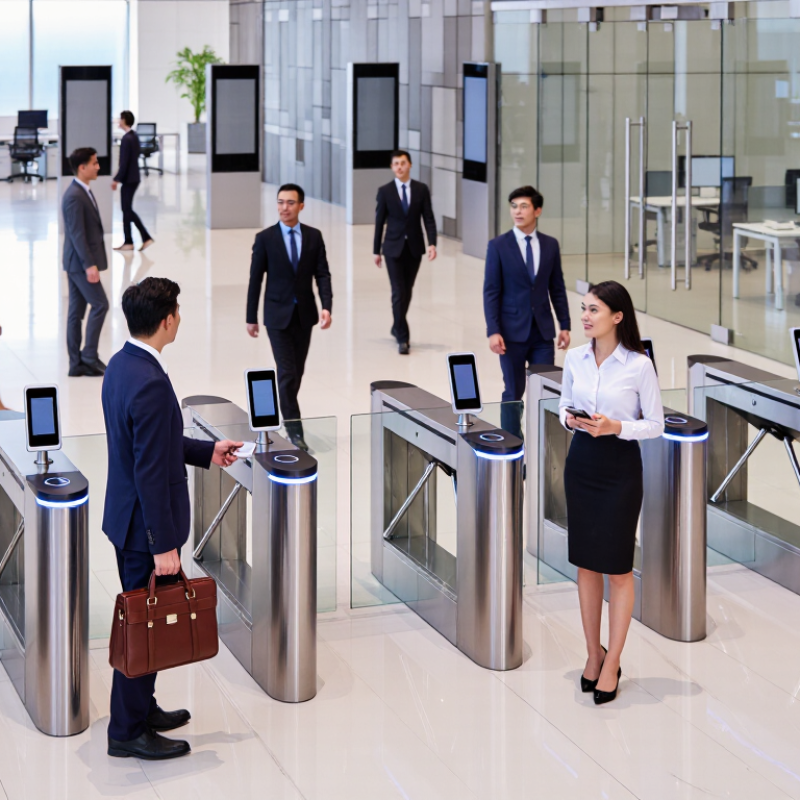
A door access card system controls entry through a credential, reader, controller, and management software. A user presents a card or fob near the reader. The controller checks its permission rules, then releases the lock within seconds. It also records the event, including the door, credential, and time. In practice, the system resembles a carefully managed guest list. It is not magic. If a card is lost, administrators should revoke it immediately and issue a replacement.
Modern systems may support encrypted smart cards, mobile credentials, PINs, and offline operation. The reader identifies the credential, while the controller makes the access decision. This separation matters when network service fails. A locked office door should not become unusable because a server connection briefly drops. However, offline settings require careful review, especially for temporary workers and restricted rooms. That detail is often overlooked.
Industry data shows growing demand for these systems. MarketsandMarkets’ 2024 Access Control Market report projects expansion from about 10 billion dollars in 2024 to more than 15 billion dollars by 2029. Grand View Research also identifies cloud management and integrated security as major growth factors in its 2024 physical access control analysis. These figures describe market momentum, not guaranteed protection. Reliable deployment still depends on accurate permissions, protected wiring, regular audit logs, and tested emergency procedures. A small configuration mistake can matter more than an expensive reader.
Door access systems commonly use low-frequency proximity credentials at 125 kHz and high-frequency contactless smart cards at 13.56 MHz. Modern access platforms may also support mobile credentials using Bluetooth at 2.4 GHz. Frequency indicates the communication band, not market share, security level, or reading distance.
A door access card system links a credential, reader, controller, lock, and management software. The process takes seconds. A user presents a card or fob near the reader. The reader captures its credential number and sends it to the controller. The controller checks permission, time, location, and door status. If approved, it releases the electric lock briefly. The event then appears in an activity log.
Modern systems may use encrypted credentials and secure communication between devices. Some controllers continue operating during network outages. That detail matters in basements, warehouses, and older office buildings. According to MarketsandMarkets’ Access Control Market report, the global market may grow from about 10.5 billion dollars in 2023 to 14.8 billion dollars by 2028. This growth reflects demand for centralized monitoring and stronger identity management.
Installation quality still decides much of the real-world performance. A poorly aligned lock can fail even when the software works perfectly. Door sensors should confirm whether the door actually closed. Administrators should remove lost cards quickly and review unusual access times. No system is flawless. Shared cards, weak passwords, and neglected updates can undermine expensive equipment. A practical design also considers emergency egress, power failure behavior, visitor access, and accessible door operation. Security industry guidance consistently treats layered controls, audit records, and regular testing as essential parts of reliable access management.
Global access control demand is expanding. MarketsandMarkets estimates the access control market will grow from about US$10.3 billion in 2023 to US$15.2 billion by 2028. That forecast suggests stronger scrutiny of manufacturers, not just lower prices. Buyers should compare card technologies, reader performance, encryption, and credential replacement processes. A system that opens a door quickly is useful. A system that records every event clearly is safer.
Interoperability deserves close attention. Check support for OSDP, secure mobile credentials, common network protocols, and documented APIs. These features reduce dependence on one platform. Cloud administration can simplify updates across many sites, while local operation should remain available during network outages. That detail is often overlooked. It should not be. Manufacturers should also provide audit logs, role-based permissions, firmware controls, and practical data-retention settings.
Reliability is more than a product brochure. Request test evidence, environmental ratings, warranty terms, and published failure rates. The Global Market Insights access control report identifies cloud-based and wireless deployment as major growth areas through 2032, but growth does not guarantee quality. Compare total ownership cost, including licenses, installation, batteries, training, and five-year support. Independent certifications and documented cybersecurity practices add authority. Still, reports can hide site-specific problems. A polished specification sheet cannot replace a pilot test at a real door, with real users, imperfect connectivity, and occasional human error.
Leading door access card system manufacturers worldwide serve offices, hotels, hospitals, campuses, and industrial facilities. Their strongest systems combine durable card readers, encrypted communication, reliable controllers, and management software that administrators can learn quickly. A good manufacturer also supports multiple credential formats, mobile credentials, visitor workflows, and emergency override procedures.
Real-world performance depends on more than hardware specifications. During system evaluations, installers should inspect reader response near metal doors, outdoor sealing, cable protection, and controller behavior during network interruptions. The best manufacturers publish clear installation guides and provide firmware updates for several years. Responsive technical support matters too. A small wiring error can leave an entire entrance unusable.
Look for manufacturers with documented testing, traceable components, and experienced integration partners. Their systems should connect with video surveillance, time attendance, elevators, and existing security platforms without complicated workarounds. Data protection deserves careful attention, especially when access logs identify employees or visitors. Regional certifications and privacy requirements must be checked before purchase.
Cost can mislead. A cheaper reader may require frequent replacement or expensive software changes later. No supplier is perfect. Some offer excellent hardware but weak training, while others provide polished software with limited local support. A careful buyer should request a live demonstration, test failure scenarios, and speak with current installers before choosing a worldwide manufacturing partner.
Top Door Access Card System Manufacturers Worldwide?
Selecting a manufacturer starts with your facility’s daily reality, not a glossy product sheet. Walk through loading docks, emergency exits, wet entrances, and reception queues. Test cards with gloves and poor network coverage. A reliable system should support local operation during outages, clear audit trails, role-based permissions, and integration with existing security software. NIST Cybersecurity Framework 2.0 stresses governance, access control, and continuous monitoring. These principles apply to physical access, too.
Data should shape your decision. Verizon’s 2024 Data Breach Investigations Report found that the human element appeared in 68% of breaches. Therefore, choose systems with simple enrollment, strong administrator controls, and rapid credential removal. IBM’s Cost of a Data Breach Report 2024 placed the global average breach cost at 4.88 million dollars. A poorly protected management platform can create expensive exposure. ISO/IEC 27001-aligned processes and documented patch support can reveal whether a manufacturer treats security seriously. However, certification alone is not proof of good field performance.
Tips: Ask for a live demonstration, not only a video. Request three-year support costs, replacement timelines, uptime records, and integration references. Check reader performance near metal doors and crowded entrances. One overlooked detail matters: who responds at 2 a.m.? My selection process would include a small pilot, because specifications rarely show installation friction. No shortlist is perfect. Refine it after staff testing.
| Evaluation Dimension | What to Check | Recommended Benchmark | Why It Matters | Priority |
|---|---|---|---|---|
| System Architecture | Supported deployment models, including on-premises, cloud-managed, and hybrid operation | Hybrid capability with local door operation during network or cloud outages | A resilient architecture helps maintain authorized entry and event logging when internet connectivity is interrupted. | High |
| Credential Technologies | Supported card, mobile credential, PIN, biometric, and visitor credential options | Secure contactless credentials plus mobile access and multi-factor authentication support | Multiple credential options allow the facility to balance security, convenience, replacement cost, and user requirements. | High |
| Communication Protocols | Reader-to-controller and system integration protocols | OSDP with Secure Channel support; legacy Wiegand support only where migration is necessary | Encrypted, supervised communication provides stronger protection and more monitoring capability than unencrypted legacy connections. | High |
| Security Standards | Product testing, installation requirements, and applicable regional approvals | Documented conformity with relevant access-control standards, such as IEC 60839-11-1 or UL 294 where applicable | Independent standards and approvals help verify product safety, performance, and suitability for regulated facilities. | High |
| Encryption and Data Protection | Credential encryption, controller communication, administrator access, and stored event data | Encrypted communications, role-based access control, multi-factor administrator login, and audit trails | These controls reduce the risk of credential interception, unauthorized configuration changes, and loss of accountability. | High |
| Scalability | Maximum doors, readers, users, sites, and concurrent administrators supported by the platform | A documented expansion path that supports future doors, locations, and user growth without replacing the core platform | Scalability limits future migration costs and helps standardize access policies across multiple facilities. | High |
| Integration Capability | Compatibility with video surveillance, intrusion detection, visitor management, elevators, HR, and identity systems | Published APIs, documented integration methods, and support for standard enterprise workflows | Integration improves incident investigation, automates user provisioning, and reduces duplicate administration. | High |
| Offline Operation | Local credential validation, offline event storage, and synchronization after reconnection | Configurable local decision-making and event buffering at the controller or edge device | Doors should continue to enforce access policies during power, server, or network interruptions. | High |
| Environmental Protection | Reader and controller resistance to dust, water, temperature variation, impact, and outdoor exposure | Ingress protection and operating-temperature ratings appropriate for the installation environment; IP65 is commonly used for many outdoor readers | Correct environmental ratings reduce premature failures and maintenance problems in exposed locations. | High |
| Door Hardware Compatibility | Support for electric strikes, magnetic locks, motorized locks, exit devices, request-to-exit sensors, and door contacts | Compatibility confirmed for the exact lock voltage, current, fail-safe or fail-secure requirement, and fire-door configuration | Electrical and life-safety mismatches can cause unreliable operation or create compliance risks. | High |
| Life-Safety Functions | Emergency release, fire-alarm interface, egress control, lockdown, and fail-safe or fail-secure behavior | Documented emergency sequences reviewed by qualified security, electrical, and fire-safety professionals | Access control must not obstruct legally required evacuation or emergency response procedures. | High |
| Management Software | User administration, access levels, schedules, temporary credentials, reporting, alarms, and configuration history | Granular role-based permissions, approval workflows, searchable event logs, and configurable alerts | Effective software reduces administrative errors and provides clear evidence during audits or investigations. | High |
| Reliability and Availability | Controller design, power backup options, system monitoring, redundancy, and service history | Battery-backed critical components, health monitoring, and documented reliability testing or service data | Reliable operation is essential for facilities that require continuous access enforcement and traceability. | High |
| Installation and Maintenance | Wiring requirements, configuration tools, firmware management, diagnostics, and replacement procedures | Clear technical documentation, remote diagnostics where appropriate, and controlled firmware update procedures | Good maintainability lowers downtime, training requirements, and total ownership cost. | Medium |
| Support and Service Coverage | Technical support hours, response targets, local service availability, training, and spare-parts access | Written service-level commitments appropriate to the facility’s risk profile and operating hours | Support quality can be as important as hardware capability when the system protects critical areas. | High |
| Warranty and Lifecycle | Hardware warranty, software updates, firmware support, end-of-life notices, and migration options | Clearly defined warranty terms and a documented product lifecycle and upgrade policy | A transparent lifecycle reduces the risk of unsupported equipment and unexpected replacement projects. | Medium |
| Total Cost of Ownership | Hardware, licenses, credentials, installation, integrations, support, training, and recurring fees | Five- to ten-year cost model comparing capital expenditure and recurring operating expenditure | The lowest initial price may result in higher long-term costs through licensing, maintenance, or proprietary replacements. | High |
| Data Residency and Privacy | Location of hosted data, retention controls, access logs, privacy features, and regulatory responsibilities | Documented data-processing practices and configurable retention aligned with applicable privacy requirements | Access events and identity information may be sensitive personal data and should be managed accordingly. | High |
| Manufacturer Selection Process | Reference projects, independent testing, distributor capability, product roadmap, and proof-of-concept results | Shortlist vendors that pass technical, cybersecurity, life-safety, service, and total-cost evaluations | A structured evaluation helps facilities select a long-term solution rather than focusing only on reader appearance or purchase price. | High |